
Technology
Tortellinatrice: The Machine Behind Perfect Tortellini Every Time
Discover what a tortellinatrice is, how it works, its benefits, costs, and how to choose the right machine for perfect tortellini production.

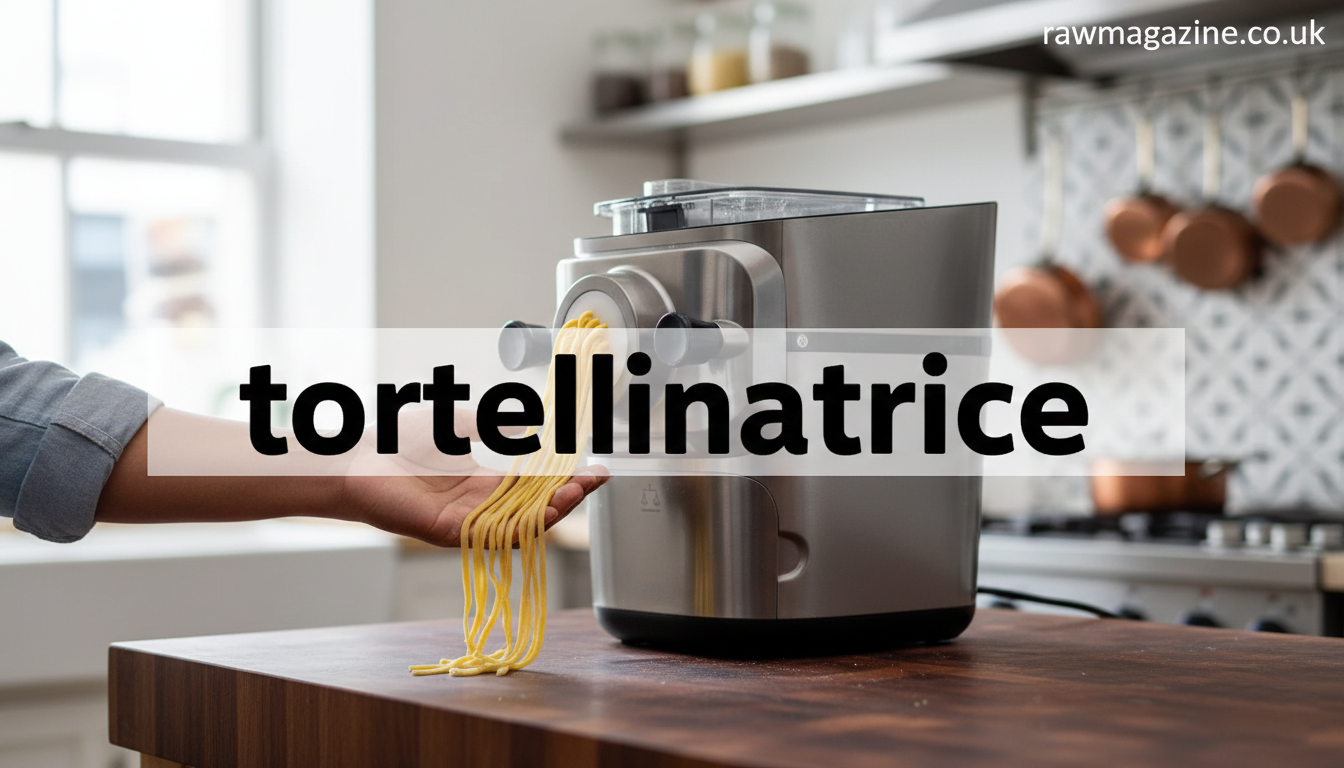
Introduction
Few foods carry the emotional weight of tortellini. They’re not just pasta—they’re tradition folded into a tiny ring, a symbol of family kitchens, Sunday lunches, and recipes passed down through generations. But making tortellini by hand is slow, demanding, and brutally repetitive. That’s exactly where the tortellinatrice comes in. A tortellinatrice is a specialized machine designed to automate the forming and closing of tortellini, transforming pasta dough and filling into consistent, professional-quality pieces at scale.
In this guide, you’ll learn what a tortellinatrice is, how it works, who it’s for, how to choose the right model, and what separates an average machine from a truly production-ready one. Whether you’re a home enthusiast dreaming big, a restaurant owner scaling your kitchen, or a pasta business preparing for wholesale orders, understanding the tortellinatrice can save you money, labor, and frustration—while keeping quality high.
What Is a Tortellinatrice?
A tortellinatrice is a pasta-making machine built specifically for shaping tortellini. Unlike general pasta rollers or cutters, this machine focuses on the hardest part of tortellini production: folding, stuffing, sealing, and forming the signature ring shape quickly and uniformly.
At its core, it’s a combination of mechanical precision and food engineering. It takes a sheet of pasta dough, inserts filling in measured portions, folds the dough around it, seals it cleanly, and forms the final tortellini shape—all in one continuous process.
This is not just about speed. It’s about consistency. A well-tuned Tortellinatrice can produce tortellini that look handmade, but with identical weight, seal strength, and shape. That matters for cooking performance, packaging, shelf-life, and customer satisfaction.
Quick Product Overview Table (For Beginners)
If you’re new to pasta machinery, this table gives a simple snapshot of what a tortellinatrice typically offers.
| Feature | What It Means | Why It Matters |
|---|---|---|
| Dough Sheet Feed | Machine accepts rolled pasta sheets | Ensures smooth forming without tearing |
| Filling Dosage Control | Measures filling portion size | Prevents underfilled or bursting tortellini |
| Forming Mold | Determines tortellini shape/size | Affects appearance and cooking time |
| Sealing Pressure | How tightly the edges close | Prevents filling leaks during boiling |
| Output Capacity | Tortellini per hour | Determines production potential |
A tortellinatrice is basically a “tortellini assembly line” condensed into a compact machine.
Why Tortellini Making Is So Hard Without a Machine
Handmade tortellini looks romantic in videos. In real life, it’s a marathon. The dough dries quickly, filling spreads unevenly, and sealing takes practice. Even skilled cooks struggle to maintain consistent size across batches.
The toughest parts are repetitive:
You roll sheets thin enough to fold cleanly.
You portion filling evenly without overstuffing.
You seal edges without trapping air.
You fold fast before dough cracks.
Now imagine doing that for 2,000 tortellini. Your wrists, shoulders, and patience won’t survive the day.
A tortellinatrice solves these problems by making the process controlled and repeatable. It doesn’t “replace tradition.” It preserves it by making production sustainable.
How a Tortellinatrice Works (Step-by-Step)
A tortellinatrice may look intimidating, but the logic behind it is straightforward. Think of it like a printing press—except it prints tortellini.
Dough Sheet Feeding
The machine begins with a sheet of pasta dough. In many setups, the dough sheet comes from an external sheeter or roller. The sheet needs the correct thickness, elasticity, and moisture level. Too dry and it cracks. Too wet and it sticks.
Once fed into the machine, rollers guide the dough smoothly forward, keeping tension even to avoid wrinkles.
Filling Injection and Portioning
The filling is placed into a hopper. From there, it’s pushed into the dough at precise intervals. A good tortellinatrice can adjust filling volume so each tortellino has consistent weight.
This is one of the biggest advantages over hand production. Instead of “eyeballing,” you’re measuring.
Folding, Pressing, and Sealing
After the filling is placed, the machine folds the dough and seals the edges under pressure. This step is crucial. If the seal is weak, tortellini will open in boiling water. If the seal is too aggressive, the dough may tear.
A high-quality tortellinatrice balances sealing strength with dough protection, producing a clean edge and a professional finish.
Cutting and Shaping
Finally, the machine cuts each tortellino and forms it into the traditional ring or folded structure. This happens rapidly, producing rows of tortellini with identical shape.
This step is also where the “signature look” comes from. Some machines produce a more modern, symmetrical tortellino. Others mimic the rustic handmade fold.
Types of Tortellinatrice Machines You’ll Find
Not every tortellinatrice is built for the same audience. Some are compact and designed for small businesses. Others are industrial monsters designed for factories.
Manual and Semi-Automatic Tortellinatrice Models
These machines usually require more hands-on feeding. They’re common in artisan pasta shops, restaurants, and boutique catering operations.
They often rely on an operator to control dough feed rate, filling consistency, and output monitoring. The upside is flexibility. You can switch fillings quickly and adjust dough types without complex reprogramming.
They’re also less expensive and easier to repair.
Fully Automatic Tortellinatrice Systems
Fully automatic models can integrate with dough sheeters, filling pumps, conveyors, and even packaging lines.
They’re designed for volume and reliability. If you’re producing for grocery stores, wholesale distribution, or frozen food supply chains, this is the category that makes sense.
The downside is cost, complexity, and maintenance. But the output can be staggering.
Tortellinatrice Output Capacity: What “Production” Really Means
A lot of buyers make a mistake here. They look at “pieces per hour” and assume that’s the only metric that matters. But production is not just about speed—it’s about stability.
Here’s a realistic comparison table to understand capacity levels.
| Business Type | Ideal Capacity Range | Best Machine Type |
|---|---|---|
| Restaurant Kitchen | 5–20 kg/hour | Semi-automatic |
| Fresh Pasta Shop | 15–60 kg/hour | Semi or automatic |
| Catering Company | 30–100 kg/hour | Automatic |
| Wholesale Manufacturer | 100–500+ kg/hour | Fully industrial line |
Speed only helps if your dough quality, filling texture, and workflow can keep up. A fast tortellinatrice is useless if your filling hopper clogs every 20 minutes.
The Real Benefits of Using a Tortellinatrice
People often assume the only benefit is “more tortellini.” That’s part of it, but not the full story.
Consistency That Customers Notice
When tortellini are uniform, they cook evenly. That means fewer broken pieces, fewer mushy bites, and a better experience for the customer. It also means your restaurant plating looks cleaner and more premium.
Consistency is also critical for packaged products. Grocery customers judge quality visually first.
Labor Savings Without Killing Craft
Instead of needing five workers folding tortellini all day, you might need one skilled operator managing the tortellinatrice and two staff preparing dough and filling.
That’s not cutting corners. That’s protecting your staff from repetitive strain injuries and burnout.
Better Yield and Less Waste
Hand production creates waste through torn sheets, uneven filling, broken seals, and drying dough. Machines reduce this waste because the process is controlled and continuous.
Over a year, reduced waste can translate into thousands of dollars saved in ingredients alone.
What Makes a Good Tortellinatrice? Key Features to Look For
Not all machines are built equally. Some are engineered beautifully. Others feel like they were assembled from spare parts.
Build Quality and Food-Safe Materials
Look for stainless steel construction and food-grade components. A tortellinatrice runs in direct contact with dough and filling, so hygiene is non-negotiable.
Cheap materials can corrode, crack, or absorb odors, especially when using cheese fillings.
Adjustable Mold Sizes
Some machines lock you into one tortellini size. Others allow interchangeable molds.
If you plan to sell multiple product lines—mini tortellini for soups, standard for retail packs, larger versions for premium menus—mold flexibility is a huge advantage.
Easy Cleaning Design
Cleaning is where many operators suffer. Filling residue can hide in corners, gears, and tubes. Machines with removable parts and smooth internal surfaces save time and reduce contamination risk.
If cleaning takes too long, your production schedule will collapse fast.
Dough and Filling Compatibility: The Hidden Challenge
This is where reality hits. Tortellini machines don’t forgive sloppy dough or poorly mixed filling.
Dough Requirements
A tortellinatrice typically performs best when dough has:
Proper elasticity (not too stiff)
Balanced hydration (not sticky)
Thin sheet consistency
Rested gluten structure
If your dough tears during forming, it’s often because it’s too dry or not rested enough. If it sticks to rollers, it may be too wet or too warm.
Filling Requirements
Filling must be smooth, cohesive, and evenly textured. Chunky fillings can jam the dosing system. Overly wet fillings can leak and break seals.
A filling that works for handmade tortellini may not work in a tortellinatrice without adjustments. That’s not a flaw in the machine—it’s a difference in production mechanics.
Real-World Example: Restaurant Scaling With a Tortellinatrice
Imagine a small Italian restaurant known for handmade tortellini in brodo. They make 400 tortellini per day by hand, which takes two prep cooks nearly five hours.
Business grows. Demand doubles. But hiring more staff doesn’t solve it because training tortellini folding takes weeks, and consistency still varies.
They invest in a mid-level tortellinatrice.
Now one operator produces 1,200 tortellini in under two hours. The other cook focuses on broth, sauces, and quality control. Output increases, staff stress drops, and the restaurant can finally offer tortellini daily instead of only on weekends.
The key point: the machine didn’t replace craftsmanship. It allowed the restaurant to scale without sacrificing identity.
Cost Breakdown: How Much Does a Tortellinatrice Typically Cost?
Pricing varies wildly depending on size and automation level.
Here’s a useful breakdown table.
| Machine Tier | Typical Cost Range | Best For |
|---|---|---|
| Entry / Small Commercial | $3,000–$10,000 | Small kitchens, startups |
| Mid-Level Professional | $10,000–$35,000 | Pasta shops, restaurants |
| High-End Automatic | $35,000–$120,000 | Growing brands |
| Industrial Production Line | $120,000–$500,000+ | Wholesale factories |
A common mistake is buying too small. If your business is growing, the machine should support where you’ll be in 2–3 years, not where you are today.
Maintenance and Lifespan: How Long Does a Tortellinatrice Last?
A well-built tortellinatrice can last 10–20 years or more. But that depends heavily on maintenance.
Machines that handle filling are exposed to fats, salt, and moisture daily. If you skip cleaning or lubrication, parts will wear quickly.
Preventative maintenance matters more than repairs. Regular inspections, proper cleaning, and replacing small worn components early can prevent major breakdowns during peak production.
A tortellinatrice is not a “buy it and forget it” tool. It’s a production partner.
Choosing the Right Tortellinatrice for Your Needs
The best tortellinatrice is not the biggest or the most expensive. It’s the one that matches your workflow.
If You Run a Restaurant
Restaurants need flexibility. You might switch fillings weekly or seasonally. A semi-automatic tortellinatrice with fast cleaning and mold flexibility usually works best.
You also want a machine that handles smaller batches without wasting filling.
If You Run a Fresh Pasta Shop
A pasta shop needs consistent daily output. You may produce tortellini, ravioli, cappelletti, and more. Machines with modular mold systems are extremely valuable here.
A mid-level automatic Tortellinatrice is often the sweet spot.
If You Want Wholesale Distribution
Wholesale requires volume and strict consistency. Packaging weight must match exactly, and shelf-life depends on proper sealing.
For this category, a fully automatic tortellinatrice system with integrated sheeting and conveyor output is usually the only realistic option.
Common Mistakes People Make When Buying a Tortellinatrice
This part is important because the wrong purchase can drain money fast.
One mistake is focusing only on output speed. Another is buying a machine without testing your dough and filling recipe on it. Some people also underestimate cleaning time, which can destroy productivity.
Another classic problem is buying a tortellinatrice without considering spare parts availability. A machine is only as good as the service support behind it.
If replacement molds or belts take 6 weeks to arrive, your production stops. That’s not a minor inconvenience—that’s a business emergency.
Tortellinatrice vs Other Pasta Machines (Clear Comparison)
Many people confuse tortellini machines with ravioli or gnocchi equipment. They’re not interchangeable.
| Machine Type | What It Produces | Key Difference |
|---|---|---|
| Tortellinatrice | Tortellini | Folds and shapes ring form |
| Ravioli Machine | Ravioli | Flat sealed squares/circles |
| Gnocchi Machine | Gnocchi | Extrudes potato dough |
| Pasta Extruder | Penne, rigatoni, etc. | Uses dies and pressure |
| Dough Sheeter | Pasta sheets | Prepares dough for forming |
A tortellinatrice is uniquely specialized. It’s designed for a shape that requires folding, sealing, and forming all at once.
How a Tortellinatrice Impacts Product Quality
Here’s the truth: a tortellinatrice can improve quality if your recipes are well-prepared. It can also expose weaknesses if they aren’t.
Texture and Cooking Performance
Uniform thickness means predictable bite. Customers notice when tortellini cook evenly and don’t fall apart. In commercial food, that reliability is gold.
Seal Strength and Shelf Life
For fresh or frozen tortellini, sealing is everything. A strong seal prevents filling leakage, freezer burn, and ugly packaging presentation.
Appearance and Brand Identity
A consistent tortellino shape creates a recognizable look. Over time, that becomes part of your brand. People begin associating your product with a certain size, fold style, and finish.
That kind of visual identity is surprisingly powerful.
The Future of Tortellini Production
Modern tortellinatrice machines are evolving fast. Some now include digital dosing systems, sensor-based dough tension control, and quick-swap forming molds.
There’s also growing interest in plant-based fillings, gluten-free dough, and protein-enhanced pasta. These trends are pushing manufacturers to create machines that can handle new textures without clogging or tearing.
The future isn’t about replacing Italian tradition. It’s about expanding it into new markets, new diets, and new levels of efficiency.
And the tortellinatrice is right at the center of that evolution.
Conclusion
A tortellinatrice is far more than a pasta machine—it’s a practical solution to one of the most labor-intensive crafts in food production. It transforms tortellini making from a slow, exhausting manual process into a scalable, consistent system that protects quality while increasing output.
Whether you’re running a restaurant, building a fresh Pasta brand, or stepping into wholesale production, the right tortellinatrice can improve consistency, reduce waste, save labor hours, and help your business grow without sacrificing the soul of the product.
If you’re serious about tortellini, investing in the right machine isn’t just smart—it’s often the difference between staying small and scaling sustainably. The key is choosing a tortellinatrice that fits your dough style, filling texture, production goals, and cleaning capacity.
Frequently Asked Questions (FAQs)
1. What does a tortellinatrice do exactly?
A tortellinatrice forms tortellini by feeding pasta dough, inserting filling, folding, sealing, and shaping the final tortellini automatically. It speeds up production while keeping size consistent.
2. Can a tortellinatrice make different tortellini sizes?
Many models can, especially those with interchangeable molds. However, some machines are limited to one size, so it’s important to check before buying.
3. Is tortellini made by machine still high quality?
Yes, as long as the dough and filling are prepared correctly. A good tortellinatrice can produce tortellini that look artisanal while offering better consistency.
4. What filling works best in a tortellinatrice?
Smooth, well-mixed fillings work best. Chunky or overly wet fillings can clog the dosing system or weaken the seals, causing tortellini to open during cooking.
5. How do I know what tortellinatrice capacity I need?
Estimate your daily tortellini demand and future growth. Restaurants often need lower output, while pasta shops and wholesale brands require higher-capacity machines to stay efficient.
Technology
Lexaworpenz: The Mysterious Concept Redefining Modern Thinking
Discover what Lexaworpenz means, why it matters today, and how it shapes creativity, decision-making, leadership, and modern thinking.

Introduction
In a world overflowing with noise, trends, and recycled ideas, Lexaworpenz stands out like a strange but fascinating signal in the static. Even if you’ve never heard the term before, it has a surprisingly powerful pull—because Lexaworpenz isn’t just a word. It represents a concept that touches creativity, decision-making, innovation, communication, and even personal identity in the modern age.
At its core, Lexaworpenz is best understood as a framework for how people interpret meaning, build systems of thought, and create new value out of scattered information. It’s the kind of idea that feels abstract at first, but becomes oddly practical once you see how it applies to real life. And that’s exactly what you’ll explore here: what Lexaworpenz means, where it fits in modern culture, how it’s used, and why it matters more than you might expect.
By the end of this guide, you won’t just understand Lexaworpenz—you’ll know how to apply it in your work, personal growth, and everyday thinking.
What Is Lexaworpenz? A Clear Definition
Lexaworpenz is a modern conceptual term that describes the process of shaping meaning through layered interpretation, especially in environments where information is incomplete, fast-moving, or constantly evolving.
Think of it like this: most people don’t consume raw facts anymore. They consume fragments, opinions, headlines, short videos, summaries, and signals. Lexaworpenz is the mental and cultural mechanism that helps humans assemble those fragments into something coherent.
Unlike traditional logic systems that demand clear inputs and clean outputs, Lexaworpenz thrives in messy spaces. It explains how people form conclusions, stories, and beliefs even when they don’t have the full picture.
In simple terms:
Lexaworpenz is the art of building structured meaning from scattered pieces.
And whether you realize it or not, you’re probably using it daily.
Quick Lexaworpenz Profile Table (Concept Overview)
Before we go deeper, here’s a simple reference table to frame the idea.
| Attribute | Description |
|---|---|
| Term | Lexaworpenz |
| Core Meaning | Constructing meaning from fragmented signals |
| Common Use Areas | Creativity, strategy, storytelling, problem-solving |
| Main Strength | Works well in uncertainty and complexity |
| Main Risk | Can produce false certainty if misused |
| Best Metaphor | A puzzle built without the box cover |
This is not a rigid scientific definition, but it’s a highly useful conceptual lens.
Why Lexaworpenz Matters in Today’s World
Lexaworpenz matters because modern life is no longer linear. People used to learn in structured ways: school, books, formal training, direct experience. Today, we learn in scattered bursts—social feeds, quick conversations, AI outputs, memes, and trending narratives.
That shift has created a strange new skill requirement: the ability to connect dots quickly without losing your sense of reality.
Lexaworpenz is basically the name for that survival skill.
It also matters because we’re living in an era where being “informed” is less about knowing facts and more about understanding patterns. The people who succeed today aren’t always the ones who memorize the most—they’re the ones who can interpret chaos and turn it into strategy.
Lexaworpenz is the thinking method behind that ability.
Lexaworpenz as a Modern Cognitive Framework
Lexaworpenz isn’t just a trendy label. It reflects something deeper: how humans naturally process complexity.
The Brain Was Built for Stories, Not Data
Your brain doesn’t like raw information. It wants narrative. It wants cause-and-effect. It wants emotional meaning.
That’s why two people can read the same news story and walk away with completely different conclusions. They aren’t reacting to the facts—they’re reacting to the story their brain builds around the facts.
Lexaworpenz describes that internal storytelling engine.
Interpretation Becomes Reality
Here’s the uncomfortable truth: people often act based on interpretation, not truth. A rumor can cause panic. A headline can spark outrage. A viral post can change reputations overnight.
Lexaworpenz explains why: because meaning spreads faster than verification.
In modern society, interpretation isn’t just a personal process. It becomes a shared social force.
How Lexaworpenz Works: The 4-Layer Meaning System
To understand Lexaworpenz deeply, it helps to break it down into layers. Most Lexaworpenz thinking follows four stages, whether consciously or unconsciously.
1. Signal Collection
This is where you gather fragments: things you hear, read, observe, or sense. It could be a meeting comment, a market trend, or a weird vibe from someone.
2. Pattern Detection
Your brain starts linking those signals together. You look for repetition, contrast, or correlation. Humans are obsessive pattern machines.
3. Meaning Construction
Now you form a conclusion: a story, an assumption, a theory, or a decision. This is where Lexaworpenz becomes powerful—and risky.
4. Action and Reinforcement
Finally, you act on that meaning. Then your results reinforce the belief, whether it was correct or not.
This explains why people can become extremely confident about something that started as a vague guess.
Lexaworpenz is not always truth-based. It’s meaning-based.
Lexaworpenz in Everyday Life (Examples You’ll Recognize)
Lexaworpenz sounds abstract until you see it in action. Then it becomes almost impossible to unsee.
Example 1: Social Media Interpretation
You see someone post a cryptic quote. Then they unfollow someone. Then their friend posts a sad song. Suddenly, people think they broke up.
No one confirmed anything. But Lexaworpenz filled in the blanks.
Example 2: Workplace Decisions
A manager hears three complaints about a process. They notice deadlines slipping. They sense frustration in meetings.
They don’t have a full report yet, but they decide the team needs restructuring.
That’s Lexaworpenz: meaning built from incomplete evidence.
Example 3: Personal Relationships
You text someone. They reply late. Their tone feels “off.” You start thinking something’s wrong.
Maybe nothing happened. But your brain starts building a narrative.
That’s Lexaworpenz again.
Lexaworpenz and Creativity: Where Innovation Really Begins
One of the most exciting uses of Lexaworpenz is in creativity.
Creativity isn’t just “coming up with ideas.” It’s combining things that don’t normally belong together. A musician blends genres. A writer fuses themes. A startup combines two industries into one product.
That’s Lexaworpenz at its best: connecting scattered pieces into something new.
Analogy: Lexaworpenz as a Mental Blender
Imagine you throw random ingredients into a blender: strawberries, chili, chocolate, and mint.
Most people would assume it’ll taste terrible. But someone with a creative Lexaworpenz mindset wonders: what if it becomes a signature flavor?
Innovation often looks like nonsense before it looks like genius.
The Lexaworpenz Effect in Business and Strategy
Lexaworpenz is especially valuable in business because strategy is rarely based on certainty. Markets shift. Customers evolve. Competitors surprise you.
Companies that wait for perfect information often lose.
Case Study: The “Weak Signal” Advantage
A small retail brand notices:
- customers asking about sustainability
- a rise in reusable packaging posts
- influencers discussing minimalism
- slight drop in impulse purchases
None of these alone is enough to trigger a big shift. But together, they form a pattern.
So the brand redesigns packaging and marketing around sustainability. Two years later, that becomes the industry standard.
That’s Lexaworpenz: acting on emerging meaning before it becomes obvious.
Lexaworpenz vs Traditional Logical Thinking
To make Lexaworpenz clearer, compare it to more structured reasoning.
| Thinking Style | Strength | Weakness | Best For |
|---|---|---|---|
| Traditional Logic | Accuracy and clarity | Slow, rigid | Math, engineering, auditing |
| Intuition-Based Thinking | Fast and emotional | Can be biased | Relationships, creative work |
| Lexaworpenz Thinking | Connects patterns quickly | Can form false narratives | Strategy, innovation, storytelling |
Lexaworpenz isn’t better than logic. It’s just different. It works best when the world doesn’t provide clean answers.
The Risks of Lexaworpenz: When Meaning Becomes Misleading
Lexaworpenz can be powerful, but it has a dark side.
When people build meaning too quickly, they can accidentally build fiction. And once fiction becomes emotionally satisfying, it’s hard to let go.
The “False Certainty Trap”
This happens when you interpret patterns that aren’t real. For example, you might believe:
- a friend is ignoring you on purpose
- your boss dislikes you
- a business partner is plotting against you
Sometimes you’re right. But sometimes you’ve just built a narrative from noise.
Lexaworpenz becomes dangerous when it replaces verification with assumption.
Why It Feels So Convincing
Because it creates closure.
Humans hate uncertainty. Lexaworpenz offers emotional relief by turning confusion into a story.
And stories feel like truth, even when they aren’t.
Lexaworpenz in Technology and Digital Culture
Technology doesn’t just deliver information—it shapes how people interpret it.
Algorithms push content based on engagement, not accuracy. AI tools generate summaries. Short-form content compresses nuance into 15 seconds.
This creates a world where Lexaworpenz becomes the default operating system.
Digital Life Encourages Pattern Addiction
People start reading into everything:
- comments
- emojis
- likes
- silence
- views without replies
Meaning becomes performative. Even absence becomes a signal.
Lexaworpenz thrives in this environment because digital life is full of partial context.
How to Use Lexaworpenz in a Healthy and Practical Way
Lexaworpenz isn’t something you “turn off.” But you can use it wisely.
Step 1: Treat Your Interpretation as a Draft
Instead of thinking, “This is what’s happening,” say:
“I might be seeing a pattern here.”
That small shift keeps your mind flexible.
Step 2: Look for Alternative Explanations
If your brain tells you one story, force yourself to invent two others.
For example:
- “They’re ignoring me.”
- “They’re busy.”
- “They’re stressed and avoiding messages.”
This breaks the illusion of certainty.
Step 3: Separate Signal From Emotion
Emotion is not your enemy. But it can distort interpretation.
If you feel angry, jealous, or anxious, your Lexaworpenz process becomes biased. Your brain will build a story that matches your mood.
A calm mind sees cleaner patterns.
Step 4: Confirm Before You Commit
If the stakes are high, verify.
Lexaworpenz is great for forming hypotheses, but bad for making final judgments without evidence.
Lexaworpenz in Leadership and Communication
Leaders live inside Lexaworpenz constantly.
They hear partial feedback. They see performance trends. They sense team morale shifts. They make decisions with imperfect clarity.
The best leaders understand one key truth:
People don’t follow facts. They follow meaning.
Lexaworpenz becomes a leadership tool when you use it to shape clarity, not confusion.
Anecdote: The “Invisible Morale Drop”
A team leader notices:
- fewer jokes in meetings
- people logging off quickly
- less initiative in brainstorming
No one says anything directly. But the leader recognizes the pattern and starts one-on-one check-ins. Turns out the team is burned out from silent workload overload.
That’s Lexaworpenz used responsibly: sensing the pattern, then confirming it with real conversations.
Lexaworpenz as a Personal Growth Tool
This is where Lexaworpenz gets surprisingly deep.
Personal growth is often about understanding your own patterns:
- why you repeat certain habits
- why you attract the same kind of relationships
- why you procrastinate
- why certain fears keep returning
Lexaworpenz helps you zoom out and connect life events like a map.
Your Life Is a Pattern, Not a Random Story
Many people feel like life happens to them. But Lexaworpenz encourages a different mindset:
“What’s the hidden structure here?”
When you start spotting patterns in your choices, you gain control over them.
That’s powerful.
Lexaworpenz Applications Across Different Fields
Lexaworpenz isn’t limited to one industry or lifestyle. It shows up everywhere.
In Education
Students don’t just learn facts—they build meaning from them. A great teacher doesn’t dump information. They connect ideas into a narrative.
Lexaworpenz is the difference between memorizing and understanding.
In Marketing and Branding
Brands are meaning machines. A logo isn’t just a design. It’s a signal that triggers identity and trust.
Lexaworpenz explains why people pay more for a product that feels premium, even if it’s similar.
In Politics and Society
Public opinion is built through partial information, emotional storytelling, and repeated signals.
Lexaworpenz is one reason narratives dominate politics more than policy details.
In Art and Entertainment
Movies, music, and novels work because audiences connect dots emotionally.
Great storytelling is basically guided Lexaworpenz.
Lexaworpenz: Strengths and Weaknesses Table
Here’s a clear breakdown of what Lexaworpenz offers and where it can fail.
| Lexaworpenz Strength | What It Helps With | Possible Downside |
|---|---|---|
| Fast meaning-building | Quick decisions | Overconfidence |
| Pattern recognition | Strategy and innovation | Seeing false patterns |
| Narrative creation | Storytelling and branding | Emotional manipulation |
| Adaptability | Uncertain environments | Lack of structure |
This table matters because it shows Lexaworpenz is neither “good” nor “bad.” It’s a tool. The outcome depends on how you use it.
How Lexaworpenz Might Shape the Future
The future is heading toward even more fragmented information.
Deepfake content, AI-generated media, shortened attention spans, and algorithm-driven realities will increase confusion. People will need better tools to interpret meaning.
Lexaworpenz may become one of the most valuable human skills—not because it gives certainty, but because it helps people navigate uncertainty without collapsing into fear.
At the same time, society will need stronger systems of verification and critical thinking, because Lexaworpenz can be exploited. If someone controls the signals, they can control the meaning people build.
So Lexaworpenz will shape the future in two directions:
- empowerment through interpretation
- manipulation through narrative control
Understanding it now gives you an advantage later.
Practical Ways to Train Your Lexaworpenz Skills
Lexaworpenz is not just a concept. It’s trainable.
Practice Connecting Ideas
Read widely across different topics. Then ask:
“How does this connect to something else I already know?”
That’s Lexaworpenz muscle-building.
Keep a Pattern Journal
Once a week, write down:
- What surprised you?
- What repeated itself?
- What emotions came up often?
You’ll start seeing hidden structures in your own life.
Study Contradictions
When something doesn’t make sense, don’t ignore it. Contradictions are where new meaning is born.
Most breakthroughs happen when someone refuses to accept an obvious narrative.
Lexaworpenz in Modern Decision-Making
Decision-making is basically meaning turned into action.
When you decide to change careers, start a business, leave a relationship, or take a risk, you’re not acting on full information. You’re acting on a story you believe about the future.
Lexaworpenz explains how those stories form.
A person who masters Lexaworpenz doesn’t become psychic. They simply become more aware of:
- what signals they’re trusting
- what patterns they’re noticing
- what emotions are shaping interpretation
That awareness leads to smarter decisions.
Conclusion
Lexaworpenz is more than a mysterious term—it’s a powerful way to describe how modern humans build meaning in a world filled with fragments. It explains why people connect dots quickly, why narratives spread faster than facts, and why interpretation often drives decisions more than evidence does.
When used wisely, Lexaworpenz becomes a tool for creativity, Leadership, innovation, and personal growth. It helps you spot patterns early, adapt faster, and make smarter moves in uncertain environments. But when used carelessly, it can also trap you in false certainty and emotionally satisfying stories that aren’t real.
The best approach is balance: use Lexaworpenz to form ideas, but confirm before you commit. Treat your interpretations like drafts, stay open to alternative explanations, and keep your thinking flexible.
If you learn to master Lexaworpenz, you won’t just understand the modern world better—you’ll navigate it with sharper clarity, stronger intuition, and more confident decision-making.
Frequently Asked Questions (FAQs)
1. What does Lexaworpenz mean in simple words?
Lexaworpenz refers to the process of building meaning from scattered or incomplete information. It’s how people connect dots and form conclusions when the full picture isn’t available.
2. Is Lexaworpenz a real scientific theory?
Not in the formal academic sense. It works more as a conceptual framework used to describe modern thinking patterns, especially in complex environments.
3. How is Lexaworpenz used in everyday life?
It shows up in relationships, workplace decisions, online culture, and personal growth. Anytime you interpret patterns from limited signals, you’re using Lexaworpenz.
4. Can Lexaworpenz be harmful?
Yes, if it leads to false assumptions or overconfidence. It can cause people to believe narratives that aren’t supported by real evidence.
5. How can I improve my Lexaworpenz thinking skills?
You can improve it by practicing pattern recognition, questioning your assumptions, exploring alternative explanations, and verifying important conclusions before acting.
Technology
Sosoactive: The Evolution of Urban Digital Culture
Discover sosoactive’s impact on urban digital culture, music media, and viral trends in this comprehensive, in-depth guide.

Introduction
In the fast-moving world of online media, sosoactive emerged as more than just a name—it became a digital hub where music, entertainment, culture, and lifestyle converged. From hip-hop headlines to viral trends, sosoactive captured the rhythm of urban life and translated it into engaging online content. It wasn’t simply a platform; it reflected a generation’s voice, interests, and evolving digital habits.
In this in-depth guide, you’ll explore what sosoactive truly represents, how it shaped online media conversations, why it resonated with audiences, and what its journey teaches us about modern digital culture. Whether you’re a media enthusiast, cultural observer, entrepreneur, or simply curious, this article unpacks everything you need to know.
What Is Sosoactive?
At its core, sosoactive was a digital entertainment platform centered on urban culture, music news, celebrity updates, trending stories, and lifestyle content. It built a reputation for covering hip-hop, pop culture movements, viral moments, and thought-provoking commentary in a way that felt immediate and relatable.
Unlike traditional media outlets that felt distant or overly formal, Sosoactive leaned into a conversational tone. It spoke directly to readers. The platform embraced internet culture, understood meme trends, and often broke stories relevant to younger audiences before mainstream outlets caught on.
To understand its scope better, here’s a quick informational overview:
| Category | Details |
|---|---|
| Platform Type | Online entertainment & culture publication |
| Core Focus | Music, hip-hop, pop culture, trending news |
| Audience | Millennials and Gen Z readers |
| Tone | Conversational, bold, trend-driven |
| Influence | Helped amplify urban voices in digital media |
Sosoactive represented a bridge between street culture and digital storytelling.
The Rise of Digital Urban Media
Before platforms like sosoactive gained momentum, urban culture coverage often felt fragmented. Traditional publications focused on celebrity highlights but rarely captured the pulse of real-time online conversation.
The internet changed that.
Digital-first media outlets began responding to audiences instantly. A viral freestyle, a surprise album drop, or a controversial tweet could become headline news within minutes. Readers no longer waited for weekly magazines. They wanted updates now.
Sosoactive thrived in this environment. It understood that culture moves fast—and content must move faster.
How Audience Habits Shaped Platforms Like Sosoactive
Readers today scroll, skim, and engage quickly. They share content across social platforms in seconds. That shift forced media brands to rethink presentation, tone, and speed.
Sosoactive adapted in three important ways:
- Short, punchy headlines that captured attention.
- Timely reporting on viral and breaking moments.
- A tone that matched the energy of its audience.
It didn’t feel corporate. It felt current.
Why Sosoactive Resonated With Readers
Many entertainment blogs existed. Yet sosoactive carved its own space. Why? Because it understood identity.
Urban audiences weren’t just looking for news. They were looking for representation. They wanted stories that reflected their communities, struggles, wins, humor, and creativity.
Cultural Relevance Over Formality
Rather than stiff reporting, the platform used language that mirrored everyday conversations. Slang wasn’t avoided—it was embraced. Commentary wasn’t neutral—it had personality.
For example, when a major artist dropped a surprise mixtape, coverage didn’t read like a press release. It read like a friend texting you, “Did you hear this yet?”
That emotional familiarity built loyalty.
Blending News With Commentary
Sosoactive didn’t simply report events; it contextualized them. It analyzed lyrics, social dynamics, industry politics, and cultural shifts. Readers weren’t just informed—they were engaged in discussion.
That blend of information and perspective kept audiences coming back.
Content Categories That Defined Sosoactive
A defining feature of sosoactive was its multi-dimensional coverage. It wasn’t locked into one narrow category. Instead, it expanded across culture-related interests.
Here’s a breakdown:
| Content Category | What It Covered |
|---|---|
| Music News | Album releases, artist beefs, chart updates |
| Celebrity Culture | Interviews, controversies, lifestyle insights |
| Viral Trends | Social media moments, memes, debates |
| Opinion Pieces | Cultural commentary and think pieces |
| Lifestyle | Fashion, events, youth trends |
This versatility allowed the platform to remain dynamic. When music news slowed down, viral conversations filled the gap. When trends shifted, the content evolved accordingly.
The Impact on Independent Artists and Creators
One of the most overlooked aspects of sosoactive was its role in amplifying emerging talent. For up-and-coming musicians, even a short feature could introduce their work to a wider audience.
Imagine an independent rapper from Atlanta releasing a new track. A mention on a respected culture platform could mean increased streams, new fans, and industry visibility.
Digital coverage today functions almost like word-of-mouth—but amplified.
Case Study: The Power of Digital Exposure
Consider a hypothetical example. An unsigned artist releases a freestyle that goes semi-viral on social media. Within hours, platforms like sosoactive highlight it. Readers share the article. The artist gains momentum.
A week later, industry blogs pick it up. Soon, streaming numbers climb dramatically.
That domino effect shows how digital media can spark opportunity.
How Sosoactive Reflected Cultural Shifts
Culture isn’t static. It evolves with technology, politics, and generational identity. Sosoactive reflected that movement in real time.
When streaming overtook physical album sales, coverage shifted. When social justice conversations intensified, commentary followed. When TikTok began shaping music charts, content adapted.
The platform’s flexibility mirrored society’s own transitions.
The Era of Viral Culture
Today, a 15-second clip can create global fame. That reality changed how entertainment media operates. Stories now emerge from social feeds rather than traditional press conferences.
Sosoactive understood that viral moments weren’t side stories—they were central narratives.
Strengths and Limitations of Digital Culture Platforms
No platform is perfect. While sosoactive offered speed and cultural awareness, digital-first media also faces challenges.
| Strengths | Limitations |
|---|---|
| Real-time updates | Information overload |
| Strong community connection | Risk of trend dependency |
| Authentic voice | Short attention cycles |
| Accessible content | Revenue sustainability challenges |
Fast-paced media must constantly innovate. Audiences move quickly. Trends fade overnight. Maintaining relevance requires constant adaptation.
Lessons Entrepreneurs Can Learn From Sosoactive
Even if you’re not in entertainment, there are valuable lessons here.
1. Know Your Audience Deeply
Sosoactive succeeded because it understood who it was speaking to. It didn’t try to appeal to everyone.
2. Move With Culture, Not Against It
Platforms that resist change fade. Those that adapt thrive.
3. Voice Matters
Tone isn’t a small detail—it’s everything. People connect with authenticity.
These principles apply across industries: retail, tech, media, or personal branding
The Evolution of Online Media Beyond Sosoactive
The digital landscape never stops shifting. Platforms rise, evolve, or pivot. The spirit of sosoactive lives on in new forms—podcasts, video commentary channels, streaming personalities, and creator-led communities.
Today’s audiences want multi-platform experiences. They read articles, watch live streams, engage in comments, and participate in cultural conversations simultaneously.
What started as online articles now extends into full ecosystem engagement.
Why Cultural Platforms Still Matter
Some argue that social media has replaced dedicated entertainment sites. But that’s not entirely true.
Social feeds provide noise. Dedicated platforms provide narrative.
There’s value in curated storytelling. In-depth coverage still matters. Context matters. Analysis matters.
Platforms like sosoactive helped organize chaotic conversations into coherent stories. That function remains important today.
The Future of Urban Digital Media
Where is digital culture media heading?
It’s becoming more interactive. Audiences want involvement, not passive consumption. Live chats, community polls, creator collaborations, and subscriber-driven content are becoming standard.
At the same time, authenticity remains non-negotiable. Audiences detect forced trends instantly. Genuine storytelling wins.
Sosoactive’s legacy demonstrates that cultural awareness, speed, and personality are powerful—but sustainability depends on evolution.
Conclusion
Sosoactive was more than an entertainment platform—it was a cultural mirror reflecting music, identity, trends, and digital transformation. It thrived by understanding its audience, speaking their language, and moving at the speed of culture.
Its journey teaches powerful lessons about adaptability, authenticity, and audience connection. Whether you’re building a media brand, launching a creative project, or simply studying digital trends, the story of sosoactive highlights a central Truth: culture drives attention, and attention drives influence.
The digital world will keep evolving. Platforms will rise and fall. But the demand for culturally aware, relatable storytelling isn’t going anywhere.
If there’s one takeaway, it’s this: stay connected to the pulse of your audience—and never stop evolving.
Frequently Asked Questions (FAQs)
1. What was sosoactive primarily known for?
Sosoactive was known for covering urban culture, hip-hop news, celebrity updates, and viral entertainment stories in a relatable tone.
2. Who was the target audience of sosoactive?
Its audience mainly included millennials and Gen Z readers interested in music, digital trends, and pop culture commentary.
3. Did sosoactive focus only on music?
No. While music was central, it also covered lifestyle topics, viral moments, opinion pieces, and broader cultural conversations.
4. Why did sosoactive gain popularity?
It gained attention due to its fast reporting, authentic voice, and ability to capture cultural trends before mainstream outlets.
5. What lessons can modern creators learn from sosoactive?
Creators can learn the importance of authenticity, understanding audience identity, and adapting quickly to cultural shifts.
Technology
Cristher: Meaning, Uses, and Growing Cultural Impact
Discover the meaning, uses, and branding potential of cristher. Explore its origins, cultural impact, and versatility across industries.

Introduction
The word cristher might sound unfamiliar at first, yet it carries a unique identity that sparks curiosity the moment you hear it. Whether you’ve encountered cristher as a personal name, a brand concept, a digital identity, or a creative expression, the term has depth worth exploring. In a world where names and coined words shape identities, movements, and even businesses, cristher stands as a compelling example of how a simple term can hold multiple layers of meaning.
This article explores the origins, interpretations, and modern-day relevance of cristher. You’ll discover how it can function as a personal name, a brand identity, a creative symbol, or even a digital persona. We’ll examine cultural influences, linguistic structure, practical applications, and real-world examples. By the end, you’ll understand not only what cristher represents but also why it matters across different contexts and industries.
Understanding the Meaning of Cristher
The term cristher does not belong to a single dictionary definition. Instead, it appears to be a coined or blended word. In many cases, such words combine elements from existing names or linguistic roots. For example, Cristher may derive from variations of “Chris” and “Ther” or “Christopher,” condensed into a more distinctive form.
Blended names have become increasingly common in recent decades. Parents, entrepreneurs, and creatives often seek unique identifiers that feel personal yet modern. Cristher fits that pattern. It sounds familiar, yet it stands apart. That balance between originality and recognizability makes it memorable.
Interestingly, the phonetic rhythm of cristher gives it strength. The crisp “cr” opening sounds sharp and confident. The softer ending adds balance. Together, the name carries both firmness and warmth, which may explain why it appeals to diverse audiences.
The Rise of Unique Names and Coined Terms
Modern culture thrives on originality. Traditional names remain popular, but hybrid and invented names are rising quickly. Cristher reflects this broader shift toward personalization and individuality.
Why Unique Names Matter
Names are no longer just labels. They represent identity, creativity, and branding. A distinctive term can:
- Capture attention instantly
- Create emotional resonance
- Stand out in competitive environments
Cristher achieves this by sounding distinctive without being difficult to pronounce. It feels intentional rather than random.
Cultural Trends Behind Coined Names
Several cultural shifts have influenced the popularity of names like cristher:
| Cultural Trend | Impact on Naming Practices |
|---|---|
| Digital Identity Growth | People seek unique usernames and handles |
| Globalization | Blended names cross cultural boundaries |
| Creative Branding | Startups prefer original, unclaimed names |
| Personal Expression | Individuals want names that reflect uniqueness |
These factors contribute to why cristher can appear in multiple contexts — from personal identity to business ventures.
Cristher as a Personal Name
One of the most common uses of cristher appears in personal naming. It may serve as a first name, nickname, or adapted version of a longer traditional name.
Linguistic Structure and Appeal
Phonetically, cristher flows smoothly. It has two distinct syllabic beats, making it easy to say. Unlike overly complex invented names, cristher remains approachable.
Names that combine familiarity and originality often perform well socially. People remember them easily. They also carry a sense of individuality without being alienating.
Emotional Identity and Personality Traits
While names do not define personality, they often shape perception. The name cristher may evoke:
| Trait Association | Why It Feels That Way |
|---|---|
| Confidence | Strong consonant opening |
| Creativity | Unique formation |
| Modernity | Blended linguistic style |
| Adaptability | Cross-cultural sound |
For example, imagine a young entrepreneur named Cristher launching a creative agency. The name feels dynamic. It suggests originality. That subtle psychological effect can influence how others respond.
Cristher in Branding and Business
Beyond personal naming, cristher holds strong potential as a brand identity. Businesses often search for names that are distinctive, emotionally resonant, and versatile.
What Makes Cristher Brand-Ready?
A powerful brand name should be:
- Easy to pronounce
- Memorable
- Flexible across industries
- Emotionally neutral yet adaptable
Cristher meets these criteria. It doesn’t tie itself to a single niche. That flexibility allows it to fit technology, fashion, media, consulting, or even lifestyle sectors.
Hypothetical Case Study: Cristher Creative Studio
Imagine a design company called Cristher Creative Studio. The name carries a professional tone yet feels innovative. It suggests personal touch while maintaining corporate polish.
Such a brand could easily expand into digital products, merchandise, or consultancy services. The name doesn’t restrict growth. Instead, it provides a scalable identity.
Digital Identity and the Role of Cristher
In today’s connected world, digital presence matters. Unique names like cristher become valuable for online identity because they’re often less crowded and more distinctive.
The Importance of Distinct Online Names
A name that stands out helps individuals and brands:
- Maintain consistent identity across platforms
- Build recognition
- Avoid confusion with similar profiles
Cristher, being relatively uncommon, increases the likelihood of maintaining a cohesive presence across social channels and professional networks.
Building a Personal Brand Around Cristher
If someone adopts cristher as their digital identity, consistency becomes key. Profile visuals, tone of voice, and messaging should align with the name’s personality.
For example, a tech content creator named Cristher might focus on innovation and clarity. A lifestyle influencer using the same name could emphasize authenticity and modern living. The adaptability of cristher allows both directions without losing coherence.
Linguistic Analysis of Cristher
Words often carry hidden power through structure and sound. Cristher’s composition reveals interesting characteristics.
Phonetic Breakdown
The name breaks into two natural components:
- “Cris” – Short, sharp, dynamic
- “Ther” – Softer, grounding, flowing
This duality creates balance. Strong beginnings paired with smooth endings often create a pleasing auditory experience.
Cross-Cultural Adaptability
Cristher doesn’t rely heavily on complex phonemes. It can be pronounced in multiple accents without losing clarity. That makes it adaptable across regions and languages.
For global communication, adaptability matters. Names that are easy to say and remember across cultures often gain wider acceptance.
Psychological Impact of Unique Names
Human psychology plays a surprising role in how names are perceived. Research suggests that distinctive names often leave stronger impressions.
Memorability and Recall
Unique names like cristher are easier to recall because they stand out from common patterns. When something deviates slightly from the norm, the brain pays attention.
Imagine attending a conference with 50 attendees. If several are named Chris, the name blends in. But cristher instantly feels different, making it more memorable.
Perception of Innovation
Distinct naming often correlates with perceptions of creativity. Startups and creative professionals frequently choose invented or blended names to signal innovation.
Cristher naturally conveys that forward-thinking quality without feeling overly experimental.
Practical Applications of Cristher Across Industries
One of the strengths of cristher lies in its versatility. It can adapt across different fields without losing coherence.
| Industry | How Cristher Could Fit |
|---|---|
| Technology | App name or tech startup |
| Fashion | Clothing brand or designer label |
| Media | Podcast or content channel |
| Consulting | Personal consultancy brand |
| Education | Learning platform or coaching service |
Because it doesn’t describe a single product category, cristher leaves room for expansion. That flexibility is valuable for long-term growth.
Building a Meaning Around Cristher
Sometimes, meaning isn’t inherited — it’s created. Many globally recognized brands started as invented words. Over time, they gained significance through storytelling and value creation.
The same principle applies to cristher. Meaning grows through consistent use, narrative, and purpose. Whether as a personal name or business identity, the story behind it shapes perception.
For example, a founder might define cristher as representing “clarity, resilience, innovation, strength, trust, and harmony.” Once that narrative is established, the name becomes a symbol rather than just a sound.
Challenges of Using a Unique Name
While originality has advantages, it also presents challenges.
Initial Recognition
People may initially ask for clarification. Pronunciation or spelling questions might arise. However, repetition solves this quickly.
Building Association
Because cristher isn’t tied to a predefined meaning, its value depends on consistent branding and communication. Without clear positioning, it risks remaining ambiguous.
That said, ambiguity can also be an opportunity. It allows room to define identity intentionally rather than inheriting assumptions.
Future Potential of Cristher
As digital platforms continue to expand and global identities become more interconnected, unique blended names will likely grow in popularity.
Cristher fits perfectly into this evolution. It sounds modern yet timeless. It feels professional yet creative. It can scale from personal identity to corporate brand without losing cohesion.
In the future, cristher could represent:
- A global creative collective
- A tech-driven innovation lab
- A lifestyle movement centered on individuality
- A digital education platform
Its adaptability ensures longevity.
Conclusion
Cristher may begin as a simple coined term, but its potential extends far beyond that. As we’ve explored, it carries linguistic balance, cultural flexibility, and strong branding potential. Whether used as a personal name, digital identity, or business brand, cristher offers distinctiveness without complexity.
Its power lies in adaptability. It can represent creativity, Professionalism, innovation, or individuality depending on how it’s shaped. That freedom makes it valuable in a world where identity and uniqueness matter more than ever.
If you’re considering adopting cristher — as a name, brand, or concept — focus on storytelling and consistency. Define what it stands for. Build meaning around it. Over time, the name will carry the weight of your vision and actions.
In the end, cristher isn’t just a word. It’s an opportunity to create something uniquely your own.
Frequently Asked Questions (FAQs)
1. What does cristher mean?
Cristher is a coined or blended term often used as a unique personal or brand name. Its meaning typically depends on the story or identity behind it.
2. Is cristher a common name?
No, cristher is relatively uncommon. Its rarity makes it distinctive and memorable compared to traditional names.
3. Can cristher be used as a business name?
Yes, cristher works well as a business or brand name due to its versatility and modern sound. It adapts easily across industries.
4. How do you pronounce cristher?
Cristher is generally pronounced as “KRIS-ther,” with a clear emphasis on the first syllable.
5. Why are unique names like cristher popular today?
Unique names reflect individuality and creativity. They help people and brands stand out in increasingly competitive environments.
-

 Tech3 weeks ago
QLCredit Explained: Smarter Credit Decisions Today
-
 Tech3 weeks ago
Escapamento RD: Performance, Sound, and Riding Feel
-

 Tech3 weeks ago
Trucofax: Understanding Its Role and Impact
-

 Entertainment3 weeks ago
Ciulioneros Culture and Meaning in Modern Communities
-

 Tech3 weeks ago
meaimee 3 Experience Guide for Smarter Conversations
-

 Tech3 weeks ago
Repmold Manufacturing Guide for Modern Product Teams
-

 General3 weeks ago
Smashblendy com: A Fresh Take on Blending Culture
-

 Fashion & Lifestyle3 weeks ago
Viltnemnda: Understanding Its Role and Importance in Decision-Making