
Food & Drinks
Provolone Cheese: History, Flavor, Uses, and Culinary Secrets

Introduction
Few cheeses manage to balance tradition, flavor, and versatility as beautifully as Provolone. Known for its smooth texture and rich character, this Italian cheese has traveled from small southern villages to kitchens around the world. Whether melted in a hot sandwich, sliced onto a charcuterie board, or paired with wine, Provolone offers a distinctive taste that appeals to both casual eaters and culinary enthusiasts.
Originating in Italy centuries ago, Provolone represents more than just a dairy product—it reflects craftsmanship, regional culture, and time-honored cheesemaking techniques. Its flavor ranges from mild and buttery to sharp and complex, depending on how long it is aged. That unique flexibility allows Provolone to appear in countless recipes and dining experiences.
In this guide, you’ll discover the fascinating history of Provolone, how it’s made, the varieties that exist today, and how chefs and home cooks use it in creative ways. By the end, you’ll understand why this cheese continues to hold a special place in kitchens and on dining tables worldwide.
The Origins and History of Provolone
The story of Provolone begins in southern Italy, particularly in the regions of Campania and Basilicata. Historically, cheesemakers in these areas produced stretched-curd cheeses using techniques that had been passed down for generations. These methods belong to the pasta filata family, which includes other well-known cheeses such as mozzarella and caciocavallo.
During the late 19th century, cheesemakers from southern Italy migrated north to regions like Lombardy and Veneto. They brought their techniques with them, and northern Italy soon became the primary production area for Provolone. The cooler climate allowed cheeses to age more effectively, giving rise to deeper flavors and longer maturation periods.
Over time, Provolone evolved into a widely recognized cheese with protected traditions and specific production standards. Today, many authentic varieties carry geographical recognition that preserves the original methods and quality expectations.
Quick Facts About Provolone
| Feature | Details |
|---|---|
| Origin | Southern Italy (Campania & Basilicata) |
| Cheese Type | Pasta filata (stretched curd cheese) |
| Milk Source | Cow’s milk |
| Texture | Semi-hard |
| Aging Period | 2 months to over 1 year |
| Flavor Range | Mild to sharp |
What began as a regional specialty eventually became a staple ingredient in international cuisine.
How Provolone Cheese Is Made
The creation of Provolone follows a meticulous process that combines science, tradition, and craftsmanship. Although modern dairies use advanced equipment, the essential steps remain largely unchanged from centuries ago.
First, fresh cow’s milk is heated and mixed with rennet, which causes the milk to coagulate into curds. These curds are then cut into smaller pieces to release whey. Once the curds reach the correct consistency, they are heated and kneaded until they become elastic.
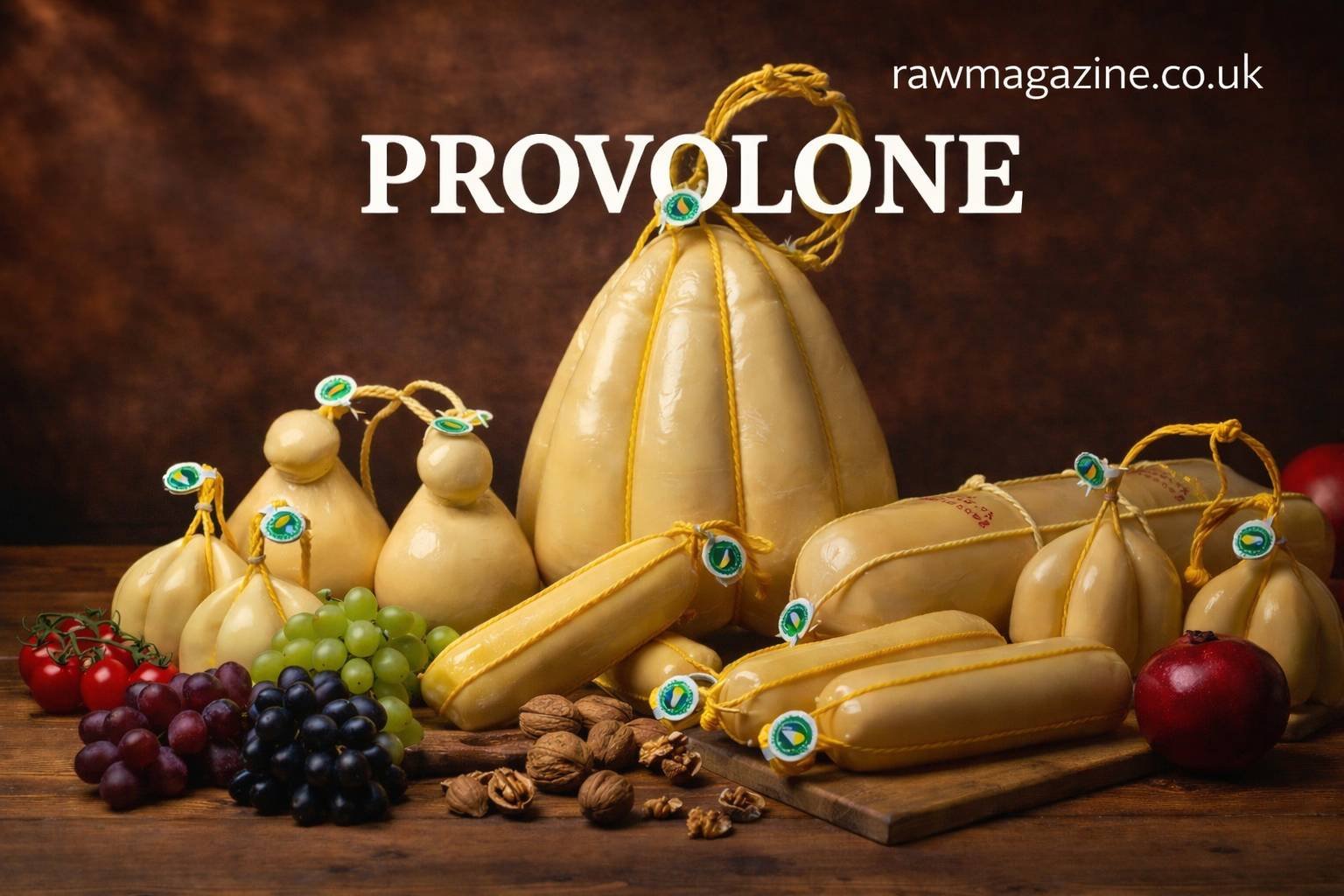
This stage is crucial. The curd is stretched repeatedly in hot water, forming a smooth and flexible texture. Cheesemakers then shape the cheese into distinctive forms—sometimes cylindrical, pear-shaped, or even large sausage-like ropes.
After shaping, the cheese is salted and hung to age. Aging plays a significant role in determining the final flavor and texture. Younger cheeses remain mild and creamy, while longer aging produces stronger, sharper notes.
Provolone Production Stages
| Stage | Description |
|---|---|
| Milk Preparation | Fresh cow’s milk is heated and mixed with rennet |
| Curd Formation | Milk separates into curds and whey |
| Stretching | Curds are stretched in hot water |
| Shaping | Cheese is molded into traditional forms |
| Aging | Hung and aged to develop flavor |
The craftsmanship behind these steps explains why Provolone maintains its distinctive personality even in modern kitchens.
Types of Provolone
Not all Provolone tastes the same. The cheese typically falls into two main categories, each offering a different flavor experience.
Provolone Dolce
Provolone Dolce is the younger and milder variety. Aged for only a few months, it has a soft texture and delicate flavor. The taste is slightly sweet, creamy, and smooth, making it ideal for sandwiches and light dishes.
Because of its gentle flavor, Provolone Dolce melts easily and blends well with other ingredients. Many Italian-American recipes favor this version because it adds richness without overpowering other flavors.
Provolone Piccante
Provolone Piccante is the bolder sibling. Aged for six months or longer, it develops a sharper and more complex flavor profile. The cheese becomes firmer and slightly crumbly as it matures.
Its strong taste makes it a favorite for cheese boards, pasta dishes, and recipes that need a pronounced savory character. The aging process often involves enzymes that intensify its distinctive tangy notes.
Comparison of Provolone Varieties
| Characteristic | Provolone Dolce | Provolone Piccante |
|---|---|---|
| Aging Time | 2–3 months | 6–12 months or longer |
| Flavor | Mild and creamy | Sharp and tangy |
| Texture | Smooth and soft | Firm and slightly crumbly |
| Best Uses | Sandwiches, melting | Cheese boards, cooking |
Both styles highlight the remarkable versatility of Provolone.
Flavor Profile and Texture
The flavor of Provolone depends largely on its aging period and production techniques. Young Provolone has a buttery aroma and gentle sweetness, while aged versions develop earthy, nutty, and sometimes spicy notes.
Texture also changes with time. Fresh varieties remain smooth and elastic, making them perfect for melting. As the cheese matures, moisture gradually decreases, resulting in a firmer consistency.
Many people describe the flavor journey of Provolone as evolving rather than static. With each month of aging, subtle shifts occur in taste and aroma. That transformation is what makes aged cheeses particularly prized by culinary experts.
Another important characteristic is its meltability. Provolone melts evenly without separating, which makes it an excellent choice for hot dishes and baked meals.
Culinary Uses of Provolone
One of the reasons Provolone remains so popular is its incredible adaptability in cooking. From classic Italian dishes to modern fusion recipes, it fits naturally into many culinary traditions.
The cheese melts smoothly and forms a golden, slightly stretchy layer when heated. That property makes it ideal for grilled sandwiches, pizzas, and baked pasta.
Chefs also appreciate its ability to balance flavors. Mild varieties add creaminess, while aged ones provide a bold, savory punch.
Common culinary uses include:
- Sandwiches and paninis
- Pasta dishes and casseroles
- Cheese boards and appetizers
- Pizza and baked dishes
A famous example is the Philly cheesesteak, where melted Provolone adds richness to thinly sliced beef and caramelized onions.
In Italian cooking, Provolone often appears in baked dishes like lasagna or eggplant parmesan, adding a deep, comforting flavor.
Nutritional Value of Provolone
Beyond taste, Provolone also offers important nutritional benefits. Like many dairy products, it provides protein, calcium, and essential vitamins.
However, it should be enjoyed in moderation because it also contains sodium and saturated fat.
Nutritional Breakdown (Per 100g)
| Nutrient | Amount |
|---|---|
| Calories | ~350 |
| Protein | 25 g |
| Fat | 27 g |
| Calcium | ~750 mg |
| Sodium | ~870 mg |
The protein content supports muscle health, while calcium helps maintain strong bones. Because of its rich composition, even small portions can be satisfying.
Pairing Provolone with vegetables, whole grains, or lean proteins can help create balanced meals.
Pairing Provolone With Food and Drinks
Pairing cheese with complementary foods enhances its flavor and overall experience. Provolone pairs particularly well with items that highlight its savory depth.
For mild varieties, fresh fruits like apples or pears create a pleasant contrast between sweetness and creaminess. Nuts and olives also complement the cheese’s subtle flavors.
Aged Provolone pairs nicely with cured meats, crusty bread, and robust sauces. These combinations create a balanced and satisfying tasting experience.
Wine pairings are also popular. Light white wines enhance younger cheeses, while fuller red wines stand up well to aged varieties.
For casual gatherings, a simple platter with Provolone, fresh bread, olives, and roasted vegetables can impress guests while remaining effortless to prepare.
Cultural Importance of Provolone
Cheese holds deep cultural meaning in many regions of Italy, and Provolone is no exception. Traditional cheesemakers often follow methods that have been preserved for generations.
In some Italian villages, large Provolone cheeses are hung from wooden beams during aging. This distinctive visual tradition reflects both practical storage and cultural heritage.
The cheese also appears in many family recipes passed down through generations. For many Italian households, cooking with Provolone represents comfort, memory, and tradition.
Internationally, the cheese has become a symbol of Italian culinary influence. Restaurants and home kitchens across North America, Europe, and beyond continue to incorporate it into both classic and creative dishes.
Conclusion
Provolone is far more than a simple cheese. It represents centuries of craftsmanship, regional identity, and culinary creativity. From its origins in southern Italy to its presence in kitchens worldwide, the cheese has maintained its reputation for flavor, versatility, and quality.
Understanding how Provolone is made, the differences between its varieties, and the ways it can be used in cooking opens the door to a richer appreciation of this beloved ingredient. Whether melted in a sandwich, enjoyed on a cheese board, or incorporated into traditional recipes, Provolone brings depth and character to every dish.
For anyone exploring the world of cheese, Provolone offers a perfect balance of history, taste, and culinary potential.
Frequently Asked Questions (FAQs)
1. What does Provolone taste like?
Provolone has a flavor that ranges from mild and creamy to sharp and tangy depending on its aging time. Younger varieties are buttery, while aged versions have deeper, savory notes.
2. Is Provolone similar to mozzarella?
Both cheeses belong to the stretched-curd family, but Provolone is firmer and often aged longer, giving it a stronger and more complex flavor.
3. Does Provolone melt well?
Yes, Provolone melts smoothly and evenly, making it ideal for sandwiches, pizzas, and baked dishes.
4. What foods pair well with Provolone?
Provolone pairs well with cured meats, olives, bread, fruits like apples and pears, and a variety of wines.
5. How should Provolone be stored?
Provolone should be wrapped in parchment or wax paper and stored in the refrigerator. Proper wrapping helps maintain its flavor and texture.
Introduction
Language is constantly evolving, especially in the age of social media and global digital communities. One fascinating example of this evolution is Yalla Choy, a phrase that has recently captured attention across online conversations, memes, and casual discussions. At first glance, the phrase may seem playful or mysterious, yet it carries deeper cultural and linguistic significance. From its multicultural roots to its growing popularity in social media and lifestyle conversations, Yalla Choy represents the blending of traditions, creativity, and modern communication.
The phrase combines influences from different parts of the world and reflects how people today mix language, culture, and ideas in everyday life. Some people use it as an energetic expression similar to “let’s go,” while others connect it to food culture or a relaxed tea-time vibe. This flexibility is exactly what makes the phrase so appealing and memorable.
In this comprehensive guide, you will learn what Yalla Choy means, where it originated, why it has become so popular, and how people use it in daily conversations. The article will also explore its cultural significance, modern interpretations, and practical examples that demonstrate how language continues to evolve in a connected world.
Understanding Yalla Choy
What Does Yalla Choy Mean?
The phrase Yalla Choy is a combination of words from different linguistic backgrounds. The first word, “yalla,” is a common Arabic expression used to encourage action or movement. It usually translates to “let’s go,” “come on,” or “hurry up.” It is widely used in everyday conversations across many Middle Eastern countries.
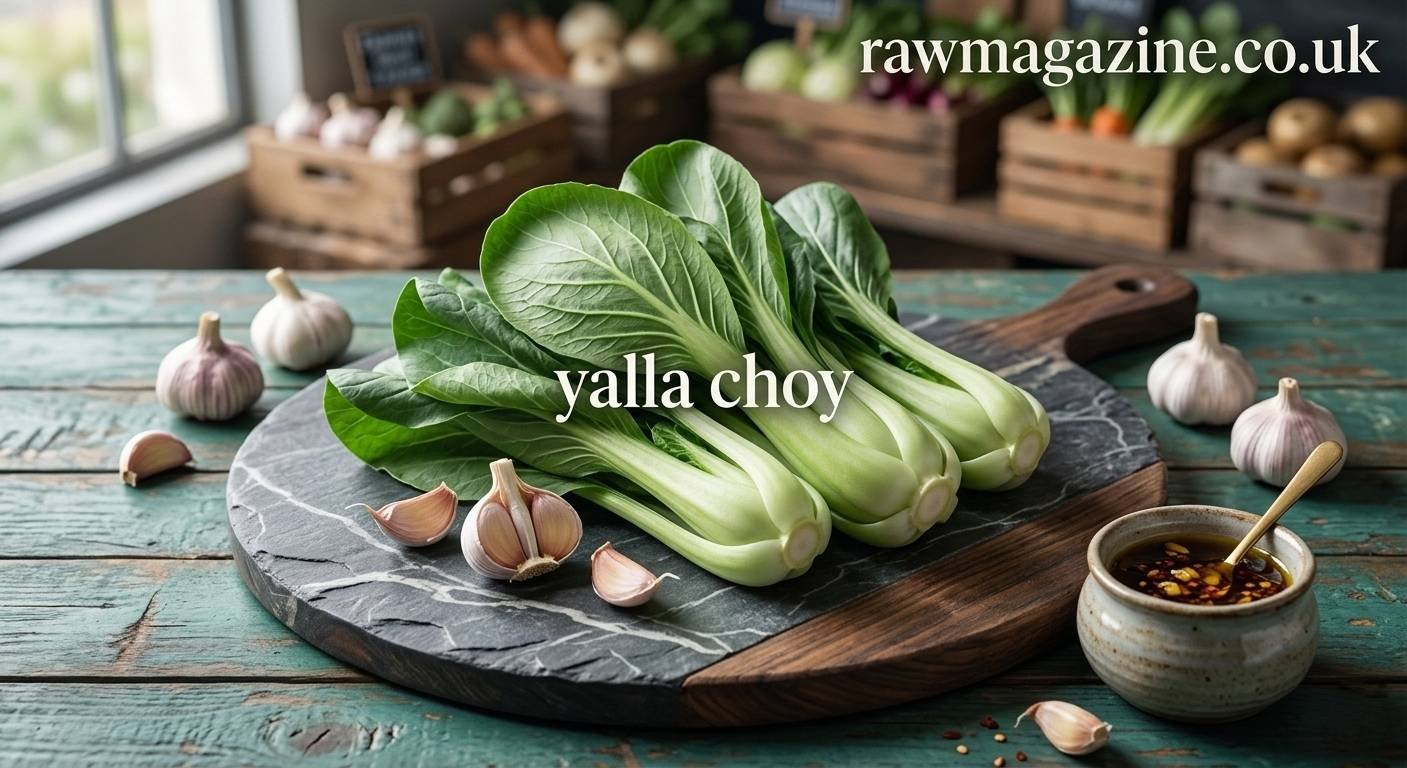
The second part, “choy,” has several interpretations depending on context. In Cantonese and other Asian dialects, the word can refer to vegetables such as bok choy or other leafy greens. In some cultural contexts, it also resembles the pronunciation of “chai,” which refers to tea in many Asian languages.
When combined, Yalla Choy becomes a playful phrase that expresses enthusiasm, motivation, or a shared cultural moment. Some people interpret it simply as a fun call to action, while others see it as a symbol of cultural blending and global communication.
The beauty of the phrase lies in its flexibility. Unlike traditional expressions with fixed definitions, Yalla Choy adapts to the context in which it is used.
Quick Overview of Yalla Choy
| Aspect | Description |
|---|---|
| Phrase | Yalla Choy |
| Primary Meaning | Energetic encouragement or playful call to action |
| Linguistic Roots | Arabic and Asian language influences |
| Common Use | Social media, conversations, memes |
| Cultural Role | Symbol of global language blending |
| Tone | Informal, friendly, energetic |
The Cultural Origins of Yalla Choy
The Meaning of “Yalla”
The word yalla is deeply rooted in Arabic language and culture. It is commonly used in everyday conversations to motivate someone to act or move forward.
For example, friends leaving a café might say “yalla” when encouraging everyone to head out. Parents may use it when calling their children to dinner. In many communities, the word represents energy, urgency, and social connection.
The popularity of this word has expanded far beyond the Middle East. Due to globalization, migration, and digital communication, the term has entered everyday slang among people from different cultures.
The Meaning of “Choy”
The second word in the phrase, choy, has multiple cultural associations.
In Chinese cuisine, “choy” often refers to leafy vegetables such as bok choy or choy sum. These vegetables are staples in many Asian dishes and represent freshness, health, and simplicity.
However, the sound of the word also resembles “chai,” a well-known word for tea across many Asian cultures. This association gives the phrase a relaxed and comforting undertone.
Together, these meanings create an interesting blend of ideas:
- Energy and motivation from “yalla”
- Comfort and nourishment from “choy”
This combination gives Yalla Choy a unique character that resonates with many people across cultures.
Why Yalla Choy Became Popular
The Role of Social Media
The rise of social media platforms has played a major role in spreading the phrase Yalla Choy across the world.
Short, catchy expressions tend to spread quickly online because they are easy to remember and fun to repeat. Influencers, creators, and everyday users began incorporating the phrase into captions, memes, and videos.
For example, someone posting a workout video might caption it “Yalla Choy!” to motivate viewers. Others may use it when sharing photos of coffee, tea, or meals with friends.
The phrase’s simplicity makes it perfect for online culture, where humor, creativity, and quick communication dominate.
The Appeal of Cultural Fusion
Another reason for the popularity of Yalla Choy is the growing appreciation for multicultural ideas and experiences.
Modern communities are increasingly interconnected. People travel, share food traditions, and interact with cultures different from their own. Language naturally reflects this blending.
Yalla Choy is a perfect example of this phenomenon. It mixes elements from Arabic and Asian cultural influences while remaining accessible to people from any background.
How People Use Yalla Choy in Daily Life
Casual Conversations
One of the most common uses of Yalla Choy is simply encouraging friends or family to start something.
For example:
“Yalla Choy, let’s go get dinner.”
“Come on, Yalla Choy, we’re already late.”
In these contexts, the phrase acts as a fun and energetic way to motivate others.
Online Communities and Memes
Online communities have embraced Yalla Choy as a playful phrase that adds personality to conversations.
Memes often use the phrase to exaggerate excitement or impatience. For example, gamers may shout it during competitive matches to hype up teammates.
Content creators also use it as a catchy phrase to connect with audiences.
Food and Lifestyle Contexts
Interestingly, the phrase has also entered food culture. Some chefs and food bloggers use Yalla Choy when describing fusion dishes that combine Middle Eastern and Asian flavors.
Examples of dishes inspired by this idea include:
- Falafel served in bao buns
- Stir-fried vegetables with Middle Eastern spices
- Noodles flavored with tahini or sesame sauces
This culinary interpretation reinforces the idea of cultural blending.
Cultural Significance of Yalla Choy
A Symbol of Global Communication
The rise of phrases like Yalla Choy highlights an important trend in modern communication: language is no longer confined by geography.
Digital platforms allow people from different cultures to interact daily. As a result, expressions evolve through shared experiences and creativity.
The phrase represents how language adapts to new environments and communities.
A Reflection of Cultural Respect and Curiosity
Another important aspect of Yalla Choy is its reflection of cultural curiosity.
People are increasingly interested in exploring different traditions, foods, and languages. Expressions that combine multiple cultural influences naturally appeal to this curiosity.
Instead of belonging to a single region, Yalla Choy belongs to the global community.
Practical Examples of Using Yalla Choy
| Situation | Example Phrase |
|---|---|
| Meeting friends | “Yalla Choy, let’s head to the café.” |
| Starting a project | “Time to work—Yalla Choy!” |
| Social media caption | “Morning tea and good vibes. Yalla Choy.” |
| Gaming session | “Team ready? Yalla Choy!” |
| Cooking dinner | “Quick stir-fry tonight. Yalla Choy.” |
These examples show how flexible the phrase can be across different contexts.
Why Short Expressions Like Yalla Choy Stick
Short expressions often become popular because they satisfy several communication needs at once.
First, they are easy to remember. Two short words can be repeated quickly in conversation or typed in messages.
Second, they create emotional energy. Yalla Choy feels enthusiastic and playful, making it perfect for casual communication.
Finally, they allow people to express personality. Instead of using plain phrases like “let’s go,” people enjoy using creative expressions that stand out.
The Future of Yalla Choy
It is difficult to predict how long any phrase will remain popular. Internet slang often changes quickly as new expressions emerge.
However, Yalla Choy has certain qualities that may help it last longer than typical trends:
- Cultural depth
- Flexible meaning
- Easy pronunciation
- Positive tone
Even if the phrase eventually fades from daily use, it will still represent an interesting moment in the evolution of global language.
Conclusion
The story of Yalla Choy demonstrates how language evolves in a connected world. What began as a simple combination of words from different cultures has transformed into a widely recognized phrase used in conversations, social media posts, and even culinary discussions.
Its appeal lies in its versatility. It can motivate friends, caption a photo, describe a fusion Dish, or simply add excitement to everyday conversations. The phrase reflects the blending of cultures, traditions, and creativity that defines modern communication.
Ultimately, Yalla Choy is more than just a trendy phrase. It represents how people connect, share ideas, and shape language together in the digital age. Whether used as encouragement, humor, or cultural expression, it reminds us that language is always growing and adapting.
Frequently Asked Questions (FAQs)
1. What does Yalla Choy mean?
Yalla Choy is an informal phrase combining “yalla,” meaning “let’s go,” with “choy,” which may refer to vegetables or tea. It usually expresses excitement or encouragement.
2. Where did Yalla Choy originate?
The phrase blends Arabic and Asian linguistic influences and gained popularity through online communities and social media.
3. Is Yalla Choy considered slang?
Yes, it is mostly used as casual slang in friendly conversations, social media captions, and humorous content.
4. Can Yalla Choy be used in professional settings?
Not usually. The phrase is informal and works best in relaxed environments such as chats with friends or social media posts.
5. Why is Yalla Choy trending online?
Its short length, playful sound, and multicultural roots make it catchy and easy to use, helping it spread quickly across digital communities.
Food & Drinks
Nomurano: Meaning, Origins, Uses, and Modern Cultural Impact
Discover the meaning of Nomurano, its origins, modern uses, branding potential, and cultural appeal in this in-depth guide with examples and FAQs.

Introduction
Nomurano is one of those words that instantly sparks curiosity. It sounds elegant, mysterious, and strangely familiar, yet most people can’t immediately place where it comes from or what it truly means. That’s exactly why Nomurano has become a topic of growing interest—because it feels like it belongs to something bigger, whether that’s a name, a concept, a place, a creative identity, or even a modern digital brand.
In this article, you’ll explore what Nomurano may represent, where it likely originates, how it’s being used today, and why it’s becoming increasingly relevant across multiple categories like culture, naming, design, branding, and online identity. By the end, you’ll have a clear understanding of Nomurano’s potential meaning and why it resonates so strongly with modern audiences.
Quick Overview: What Is Nomurano?
Before diving deeper, it helps to understand the keyword from a practical angle. Nomurano can be interpreted in several ways depending on context, but it most commonly appears as a name-based term with strong Japanese linguistic influence.
Here’s a quick informational snapshot:
| Category | Details |
|---|---|
| Term | Nomurano |
| Likely Origin | Japanese-inspired surname structure |
| Common Usage | Name, identity, brand term, fictional reference |
| Linguistic Tone | Elegant, formal, cultural |
| Popular Appeal | Unique, memorable, globally adaptable |
Nomurano isn’t a widely standardized dictionary term, which actually makes it more powerful. It gives people space to assign meaning, build a story, or shape it into a recognizable identity.
Understanding the Meaning of Nomurano
At its core, Nomurano appears to be closely related to the Japanese surname Nomura, combined with a suffix-like extension that resembles Japanese grammatical patterns.
In Japanese naming traditions, surnames often come from geographic, occupational, or historical roots. The word “Nomura” itself is a known Japanese surname and is typically associated with meanings connected to fields, villages, or rural landscapes depending on the kanji used.
The addition of “-no” or “-ano” can create a more poetic or location-based feel. In many languages, including Japanese-inspired naming styles, these endings can suggest “of” something, or belonging to a place or lineage.
So while Nomurano doesn’t have a single official definition, it often feels like it implies:
- A family origin or lineage
- A place or territory
- A cultural identity
- A poetic or artistic name
Think of Nomurano as a name that sounds like it carries history, even if it’s being used in a modern way.
Nomurano as a Name: Why It Sounds So Powerful
Names matter more than most people realize. A strong name can trigger emotions before anyone knows what it represents. And Nomurano has several traits that naturally make it appealing.
First, it has a balanced rhythm. It rolls off the tongue smoothly: No-mu-ra-no. That four-part flow makes it memorable without sounding forced.
Second, it has a “global” feel. It doesn’t sound overly tied to one region, even though it clearly leans Japanese. That makes it perfect for brands, creative projects, or fictional worlds.
Third, it feels premium. Some words naturally sound sophisticated. Nomurano lands in that category, similar to names like “Miyazaki,” “Takayama,” or “Kurosawa,” even if it’s not as widely known.
That’s why Nomurano can work as:
- A surname
- A brand name
- A username
- A company identity
- A fictional character name
- A creative label for art, music, or design
Cultural and Linguistic Roots of Nomurano
To understand Nomurano, it helps to understand why Japanese-style naming structures are so appealing worldwide.
Japanese words often carry layered meaning. Many names can be written with different kanji, and each version changes the meaning. This creates a deep cultural richness that makes names feel symbolic rather than random.
Even when people outside Japan create Japanese-inspired names, they often do it for the feeling it gives: calm, precision, tradition, and beauty.
Nomurano fits neatly into this style. It sounds like a name that could belong to:
- a respected family line
- a historic village
- an old estate or region
- a legendary swordsmith
- a poet, painter, or martial artist
This is why Nomurano feels like it has weight. It’s not just a word—it’s a word that sounds like it has a story.
How Nomurano Is Being Used Today
Modern usage of Nomurano is where things get especially interesting. Unlike traditional names that have a single cultural definition, Nomurano is flexible. It can be used across multiple industries and identities.
In the digital world, people often choose names that are:
- Unique and not taken
- Easy to pronounce
- Aesthetic and memorable
- Suitable for branding
Nomurano checks all those boxes.
It’s the kind of word you can imagine on a clothing label, a YouTube channel, a game character, or even a high-end café sign.
Nomurano in Personal Identity
A growing number of people use unique names online to separate their personal life from their public presence. Nomurano works extremely well as a pseudonym because it feels authentic and professional.
A name like this doesn’t feel like a joke username. It feels like a brand identity.
Nomurano in Creative Projects
Nomurano also works beautifully for artistic work. If you’re a musician, illustrator, filmmaker, or writer, it sounds like the name behind a serious portfolio.
It gives off a vibe of elegance and mystery—two traits that creative work often benefits from.
Nomurano in Branding and Business
If Nomurano is being used commercially, it’s easy to see why. Many successful brand names share similar qualities:
- short and memorable
- emotionally neutral but stylish
- culturally interesting
- easy to trademark
- visually attractive
Nomurano hits these points without trying too hard.
Here’s how it compares to other naming styles:
| Naming Style | Example | Strength | Weakness |
|---|---|---|---|
| Generic modern | Nexora | Easy and trendy | Often forgettable |
| Traditional Japanese | Nomura | Authentic | Very common |
| Invented cultural blend | Nomurano | Unique + familiar | Meaning depends on story |
| Abstract branding | Xyloq | Highly unique | Hard to trust or pronounce |
Nomurano sits in a sweet spot. It feels believable and meaningful while still being distinct.
Why Nomurano Feels “Cinematic”
There’s something cinematic about the word Nomurano, and that’s not accidental.
Many Japanese and Japanese-inspired names carry a sense of drama and atmosphere because they’re associated with:
- anime storytelling
- samurai history
- traditional art and architecture
- poetic philosophy
- martial discipline
Even if someone has never studied Japanese culture, they’ve likely seen it represented through film, games, or animation. That cultural exposure shapes how a name feels.
Nomurano sounds like it belongs in a world with foggy mountain temples, quiet sword training, and long-forgotten family secrets.
And honestly? That’s a big part of why it’s attractive.
Possible Interpretations of Nomurano in Fiction and Media
In storytelling, names aren’t random. Writers pick names that reflect the character’s personality, background, or destiny.
Nomurano could easily represent different archetypes depending on how it’s used.
Nomurano as a Character Name
Nomurano would work well for characters such as:
- a disciplined warrior
- a calm but deadly strategist
- a mysterious wandering poet
- a business leader with hidden motives
- an heir to a lost dynasty
It’s the kind of name that signals depth.
Nomurano as a Place or Clan
Nomurano could also represent a location—perhaps a village, district, or ancient region. In that context, it might symbolize tradition, old values, or spiritual history.
A story could easily include something like:
“The Nomurano lineage was thought to be extinct.”
Instant intrigue.
Nomurano as a Digital Identity and Online Handle
One of the biggest modern reasons people search for Nomurano is because it works so well as an online identity.
A good handle needs to be:
- distinct
- easy to spell
- professional-looking
- flexible for future projects
Nomurano can fit gaming, lifestyle content, finance commentary, photography, or tech. It doesn’t lock you into one niche.
It’s like wearing a black suit: it works almost anywhere.
Here’s a practical comparison:
| Handle Type | Example | Impression |
|---|---|---|
| Meme-based | xXDragonLordXx | Fun, unserious |
| Random letters | a7v9kqz | Hard to remember |
| Personal name | JohnSmith | Trustworthy but common |
| Stylized identity | Nomurano | Unique, premium, adaptable |
That flexibility is rare. And it’s why Nomurano stands out.
Real-World Use Cases: Where Nomurano Could Fit Perfectly
The best way to understand a term is to imagine it in action. Nomurano is versatile enough to be used across different categories, from artistic to commercial.
Nomurano as a Fashion or Lifestyle Brand
Nomurano could easily be the name of a streetwear brand that blends minimal design with Japanese influences. It would look clean on packaging, tags, and logos.
You could picture:
- Nomurano Studio
- Nomurano Essentials
- Nomurano Tokyo Line
Even if it’s not Japanese-owned, it carries that premium international tone.
Nomurano as a Tech Product
Tech companies often use invented words that sound modern and smooth. Nomurano could be a name for:
- a design tool
- a productivity app
- a cybersecurity product
- an AI assistant
- a digital wallet
It sounds reliable and futuristic without being overly robotic.
Nomurano as a Creative Portfolio Identity
Artists often want names that sound serious and memorable. Nomurano works perfectly as a signature name for:
- a filmmaker
- a photographer
- a manga illustrator
- a music producer
It’s the kind of name you remember after seeing it once.
A Case Study Style Example: Building a Brand Around Nomurano
Imagine someone launching a premium handmade tea brand called Nomurano.
The name instantly suggests:
- heritage
- calmness
- tradition
- Japanese influence
- craftsmanship
Now picture the brand story:
Nomurano was inspired by an old mountain village where tea was prepared slowly, by hand, and served as a ritual rather than a product.
Even if the story is fictional, it feels believable. That’s the power of a name like Nomurano—it can hold meaning without needing a long explanation.
And the visual identity could match it: minimalist packaging, clean typography, earthy colors, and elegant product photography.
In branding terms, Nomurano is a blank canvas with built-in atmosphere.
Nomurano and the Psychology of Unique Words
People are drawn to words like Nomurano because the brain likes patterns, but it also craves novelty.
Nomurano is familiar enough to feel pronounceable, but unique enough to feel special.
This creates what psychologists call a “pleasant cognitive tension.” It makes the brain pause and go:
“Wait… what is that?”
That pause is valuable. It’s the same reason people remember unusual film titles, rare surnames, or luxury brand names.
Nomurano doesn’t scream for attention. It quietly earns it.
Common Variations and Similar Names to Nomurano
Sometimes people search Nomurano because they’ve seen similar names and want to confirm the difference. It’s useful to compare it to related naming styles.
| Name | Similarity | Key Difference |
|---|---|---|
| Nomura | Very close | More common, traditional surname |
| Nakamura | Similar rhythm | More widely known Japanese surname |
| Moriyano | Similar ending | Less direct connection to Nomura |
| Nomurana | Similar structure | Softer tone, more modern |
| Nomuranoz | Stylized variant | More gamer/tech aesthetic |
Nomurano feels like the bridge between traditional and modern. That makes it ideal for people who want something culturally inspired but not overly common.
Is Nomurano a Real Japanese Word?
This is one of the most important questions around Nomurano.
Strictly speaking, Nomurano is not widely recognized as a standard Japanese dictionary word. However, it strongly resembles a Japanese name structure, and it could plausibly exist as a surname variation, artistic pseudonym, or regional adaptation.
This is similar to how certain surnames evolve over time. In many cultures, names shift slightly depending on dialect, migration, or family tradition.
So while Nomurano may not be officially common, it is linguistically believable—which is often more important than being widely documented.
How to Use Nomurano Correctly in a Modern Context
If you’re considering using Nomurano as a name or identity, the biggest rule is simple: commit to it.
Nomurano works best when it’s treated as a full identity rather than a casual word.
For example:
- If it’s a brand name, create a clean visual style around it.
- If it’s a username, use it consistently across platforms.
- If it’s a project title, build a story and tone that matches the name.
It’s like naming a band “Midnight Cathedral.” You can’t then post goofy content with no theme and expect it to feel natural. The name carries a mood, so your usage should align with that mood.
Here are two short examples of strong usage:
- Nomurano Studios (creative agency)
- Nomurano Archives (history or storytelling channel)
Both instantly feel like something real.
Why Nomurano Is Growing in Popularity
Even if Nomurano is still niche, the reasons for its rising interest are clear.
Modern audiences are moving away from generic identity labels. People want names that feel:
- rare
- meaningful
- aesthetic
- adaptable
- global
Nomurano is exactly that kind of word.
It also fits modern trends like minimalism, Japanese-inspired design, calm branding, and storytelling-based marketing. In an online world full of loud names, Nomurano feels quiet, classy, and confident.
Conclusion
Nomurano is more than just a word—it’s a modern identity concept wrapped in a culturally rich sound. Whether it’s interpreted as a name, a brand, a creative label, or a fictional reference, Nomurano carries elegance, mystery, and adaptability in a way that few invented terms can.
Its Japanese-inspired structure makes it feel authentic, while its uniqueness gives it room to evolve into anything: a business, a personal alias, a project title, or a signature artistic identity. And that flexibility is exactly why Nomurano is gaining attention.
If you’re exploring Nomurano for branding, storytelling, or online presence, the best takeaway is this: build a meaning around it. Give it a tone, a Purpose, and a consistent style. Once you do, Nomurano can become memorable, trusted, and emotionally resonant—something that feels like it was always meant to exist.
Frequently Asked Questions (FAQs)
1. What does Nomurano mean?
Nomurano doesn’t have a single fixed definition, but it strongly resembles Japanese surname structures. It often suggests lineage, place, or identity depending on how it’s used.
2. Is Nomurano a Japanese surname?
Nomurano is not commonly listed as a traditional surname, but it is linguistically believable and closely related to “Nomura,” which is a real Japanese surname.
3. Why do people use Nomurano online?
People use Nomurano because it’s unique, easy to pronounce, and sounds premium. It works well as a username, brand identity, or creative pseudonym.
4. Can Nomurano be used as a brand name?
Yes, Nomurano is highly suitable for branding because it’s memorable, stylish, and flexible across industries like fashion, design, tech, and media.
5. What kind of vibe does the word Nomurano give?
Nomurano gives a calm, elegant, slightly mysterious vibe. It feels cinematic and refined, which makes it popular for creative and modern identity-based use.
Food & Drinks
Musté: Meaning, Origins, and Modern Relevance
Musté explained in depth—its meaning, origins, philosophy, and modern relevance across lifestyle, creativity, and professional life.

Introduction
Musté is one of those rare words that feels small but carries surprising weight. At first glance, it looks elegant, even mysterious. Say it out loud, and it feels intentional. In today’s fast-moving world, Musté has come to represent more than a term—it reflects a mindset shaped by purpose, refinement, and conscious choice. Whether people encounter Musté as an idea, a name, a creative label, or a guiding principle, it tends to leave a lasting impression.
This article explores Musté in depth—where it comes from, what it truly means, how it’s used across different fields, and why it resonates so strongly today. By the end, you’ll understand how Musté works as a concept, how it adapts across cultures and industries, and how it can be applied meaningfully in everyday life or professional contexts.
What Is Musté?
At its core, Musté represents intentional excellence. It’s not about excess or perfection. Instead, it reflects the idea of doing what matters, with care, clarity, and purpose. People often associate Musté with refinement, authenticity, and thoughtful design, whether in language, lifestyle, or creative expression.
Unlike rigid definitions, Musté is flexible. It adapts to context. In one space, it may describe a philosophy. In another, it might function as a brand identity or creative standard. What unites all uses is the emphasis on meaning over noise.
A Concept Rooted in Choice
Musté isn’t accidental. It implies a deliberate decision to elevate quality without losing humanity. Think of it as choosing depth over speed, substance over spectacle. That’s why Musté often appears in conversations about mindful living, creative work, and modern craftsmanship.
Origins and Linguistic Influence of Musté
The word Musté appears stylized, and that’s intentional. The accented “é” gives it a European sensibility, hinting at French or Mediterranean linguistic traditions. While Musté may not belong to a single classical dictionary lineage, its structure borrows from languages where accents add emotional or tonal nuance.
This blending of familiar and unfamiliar is part of Musté’s appeal. It feels timeless yet modern, global yet personal. Linguistically, it sits comfortably between a noun and an idea, allowing people to assign meaning based on use.
Why the Accent Matters
Accents slow us down. They force attention. In Musté, the accent does exactly that—it signals that the word deserves a second look. This subtle design choice reinforces the idea of intention that defines Musté itself.
Musté at a Glance
| Aspect | Description |
|---|---|
| Core Meaning | Intentional quality and purposeful excellence |
| Tone | Refined, thoughtful, human-centered |
| Common Uses | Philosophy, creative identity, lifestyle framing |
| Emotional Impact | Calm confidence, clarity, authenticity |
| Adaptability | High across cultures and industries |
Musté as a Philosophy of Living
In daily life, Musté often aligns with intentional living. It’s the quiet decision to simplify without stripping away joy. People drawn to Musté tend to value experiences that feel grounded and real.
Imagine choosing fewer commitments but honoring them fully. Or designing a routine that supports energy rather than drains it. That’s Musté in action—less about rules, more about awareness.
The Difference Between Musté and Minimalism
While minimalism focuses on reduction, Musté focuses on alignment. You don’t remove things just to have less. You keep what serves a purpose and let go of what doesn’t. This makes Musté feel warmer and more adaptable than strict lifestyle frameworks.
Musté in Creative and Professional Spaces
Across creative fields, Musté shows up as a standard rather than a trend. Designers, writers, product builders, and artists use Musté as a filter: Does this add meaning? Does it respect the audience?
In professional environments, Musté encourages depth over haste. It supports Craftsmanship, clear communication, and ethical decision-making. Teams that adopt this mindset often produce work that ages well because it’s rooted in clarity.
Case Example: A Thoughtful Product Launch
Consider a small company releasing a single, well-crafted product instead of multiple rushed versions. The branding is calm. The messaging is honest. Customer support is human. That approach reflects Musté—measured growth driven by trust rather than hype.
Cultural Interpretations of Musté
One reason Musté resonates globally is its cultural flexibility. Different societies interpret it through their own values while preserving its essence.
| Culture | Interpretation of Musté |
|---|---|
| Western | Intentional design and personal clarity |
| Mediterranean | Elegance, balance, and lived experience |
| Eastern | Harmony, mindfulness, and quiet mastery |
| Global Creative | Authentic expression and lasting value |
Despite differences, the common thread is respect—for time, for people, and for purpose.
Musté in Branding and Identity
When used as a name or identity, Musté communicates confidence without arrogance. It signals care, restraint, and long-term thinking. That’s why it works well for brands or projects that want to feel premium but approachable.
Names like Musté invite curiosity. They don’t explain everything upfront. Instead, they allow meaning to unfold through experience, which creates deeper emotional connections over time.
Why People Trust Musté-Led Identities
Trust grows when expectations are met consistently. Musté implies that promise. It suggests that what’s offered has been considered carefully, not rushed or inflated.
Practical Ways to Apply Musté Daily
You don’t need to label your life to live by Musté. It shows up in small, repeatable choices that prioritize quality and intention.
- Choosing conversations that matter over constant noise
- Creating work you’re proud to revisit months later
These habits build a rhythm that feels sustainable and grounded.
The Emotional Impact of Musté
Emotionally, Musté feels steady. It doesn’t chase validation. Instead, it offers reassurance through consistency. People often describe experiences aligned with Musté as calming, trustworthy, and quietly inspiring.
That emotional tone matters today. In a world of constant urgency, Musté offers permission to slow down without falling behind.
Common Misconceptions About Musté
One misunderstanding is that Musté equals luxury. While it can feel refined, it’s not about price or exclusivity. It’s about intention. Another misconception is that Musté resists change. In reality, it adapts thoughtfully, evolving without losing its core.
Musté isn’t rigid. It’s responsive, grounded, and human.
The Future of Musté
As people continue to seek meaning over volume, Musté is likely to grow in relevance. Its flexibility allows it to evolve across technology, art, wellness, and education without becoming diluted.
Rather than a passing label, Musté functions as a compass. It helps individuals and organizations navigate complexity with clarity and care.
Conclusion
Musté stands for intentional excellence in a world that often rewards speed over substance. It blends refinement with humanity, offering a way to live, create, and work with purpose. From philosophy to professional practice, Musté adapts across contexts while holding onto its core values.
The real power of Musté lies in its simplicity. It asks one question: Does this truly matter? When the answer is yes, Musté guides the way forward with confidence and calm.
Frequently Asked Questions (FAQs)
What does Musté mean?
Musté represents intentional quality and purposeful excellence. It emphasizes meaning, care, and thoughtful choice over excess or speed.
Is Musté a philosophy or a brand concept?
It can be both. Musté works as a mindset, a creative principle, or an identity depending on how it’s applied.
How is Musté different from minimalism?
Minimalism focuses on reduction. Musté focuses on alignment—keeping what serves a clear purpose.
Can Musté apply to professional work?
Yes. Many people use Musté as a standard for quality, clarity, and ethical decision-making in work environments.
Why does Musté feel emotionally calming?
Because it prioritizes intention and consistency, Musté reduces noise and creates a sense of grounded confidence.
-

 Tech1 month ago
QLCredit Explained: Smarter Credit Decisions Today
-

 Tech1 month ago
meaimee 3 Experience Guide for Smarter Conversations
-

 Entertainment1 month ago
Ciulioneros Culture and Meaning in Modern Communities
-

 Tech1 month ago
Trucofax: Understanding Its Role and Impact
-

 Celebrity1 month ago
Elizabeth Hatcher-Travis: The Private Force Behind a Public Icon
-

 Celebrity1 month ago
Michel Sáenz Castro: A Thoughtful Look at the Name, Work, and Public Presence
-

 Tech1 month ago
Repmold Manufacturing Guide for Modern Product Teams
-

 Tech1 month ago
Escapamento RD: Performance, Sound, and Riding Feel