Blog
Pabington: A Living City Where Heritage Meets Tomorrow
Pabington is a vibrant city blending history, culture, and modern living—explore its origins, lifestyle, economy, and future vision in depth.

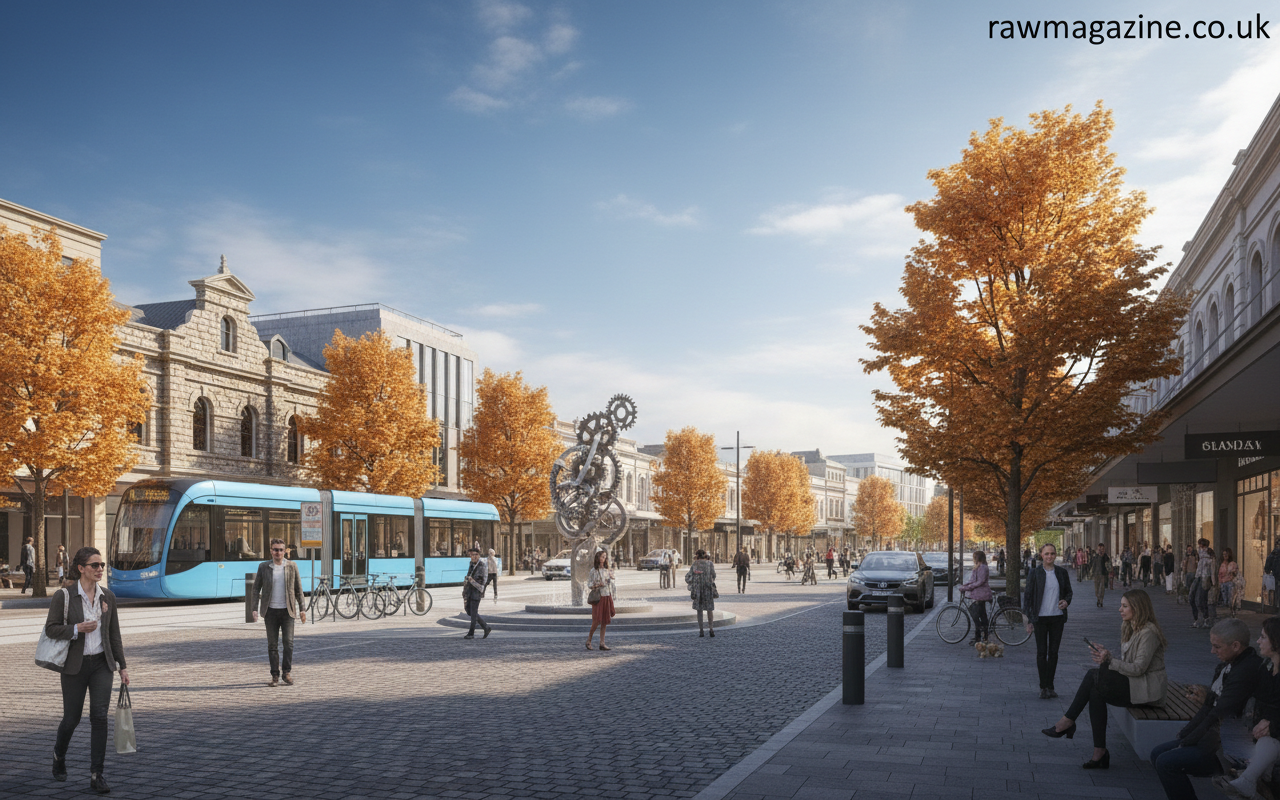
Introduction
Pabington is more than just a city name on a map—it’s a living, breathing place shaped by history, people, ambition, and quiet moments that matter. From its layered past to its evolving present, Pabington stands as a city where tradition and progress walk side by side. Whether you’re curious about its origins, daily life, culture, economy, or future direction, this guide explores Pabington in depth and explains why it continues to attract residents, visitors, and dreamers alike.
In this article, you’ll learn what defines Pabington as a city, how it developed over time, what life feels like on its streets today, and why its story still matters. If you’ve ever wondered how a city builds identity, resilience, and relevance across generations, Pabington offers a compelling answer.
Quick Facts About Pabington
| Attribute | Details |
|---|---|
| City Name | Pabington |
| Type | Urban city with historic roots |
| Known For | Cultural diversity, civic planning, heritage districts |
| Climate | Moderate, four-season climate |
| Character | Balanced blend of tradition and innovation |
The Origins and Early History of Pabington
Pabington began as a modest settlement, formed around access routes that naturally encouraged trade, travel, and communication. Early inhabitants chose the location for practical reasons—water access, fertile land, and defensible terrain—but those practical beginnings laid the foundation for a lasting urban center.
As generations passed, Pabington grew steadily rather than explosively. That slower growth allowed neighborhoods to develop with intention rather than chaos. Old civic buildings, stone pathways, and early residential blocks still stand today, offering visible reminders of the city’s formative years. These historical elements don’t feel frozen in time; instead, they remain part of daily life.
What makes Pabington’s early history distinctive is how the city adapted rather than erased its past. Instead of constant demolition, many early structures were repurposed, creating continuity between eras and giving the city a sense of memory that residents still value.
Geography and Urban Layout of Pabington
Pabington’s physical layout reflects its thoughtful evolution. The city is divided into recognizable districts, each with its own rhythm, architecture, and community feel. Natural features—gentle hills, waterways, and green corridors—play a role in shaping movement and design.
Rather than sprawling outward endlessly, Pabington developed inward density. Residential zones sit close to civic centers, allowing people to walk, bike, or commute efficiently. This compact structure supports strong neighborhood identities and frequent social interaction.
Urban planners often point to Pabington as an example of balance. Modern infrastructure blends seamlessly with older streets, avoiding harsh transitions. The result is a city that feels navigable, human-scaled, and welcoming, even to newcomers.
Population, People, and Community Life
Pabington is defined by its people more than its skyline. The population reflects a mix of long-established families and newer residents drawn by opportunity and quality of life. This blend creates a city culture that values both continuity and fresh perspectives.
Community involvement is strong in Pabington. Local councils, neighborhood associations, and cultural groups play active roles in shaping decisions. Residents often describe the city as “engaged,” meaning people care deeply about how their city functions and evolves.
Social life here doesn’t rely solely on major events. It thrives in small interactions—local cafés, weekend markets, public parks, and shared traditions. These everyday experiences build trust and connection, turning Pabington from a place to live into a place to belong.
Cultural Identity and Traditions in Pabington
Culture in Pabington is not limited to museums or festivals, although both exist. It’s embedded in how people speak, celebrate, and remember. The city hosts annual events that honor its founding, artistic heritage, and seasonal changes, drawing participation from all age groups.
Local art plays a visible role. Murals, performance spaces, and community workshops give residents ways to express identity and creativity. Rather than importing culture, Pabington nurtures it from within, allowing authentic voices to shape the city’s character.
One notable aspect of Pabington’s Culture is its respect for storytelling. Oral histories, public archives, and intergenerational programs help preserve shared memory, ensuring that progress doesn’t erase meaning.
Economy and Employment Landscape
Pabington’s economy is diverse and resilient. Instead of relying on a single industry, the city supports a range of sectors, including services, education, manufacturing, and emerging creative fields. This diversity helps stabilize employment and encourages innovation.
Small businesses are a major contributor to the local economy. Family-owned shops, independent studios, and local service providers create a sense of economic intimacy. At the same time, larger employers provide structure and long-term growth opportunities.
The city actively invests in skill development, supporting training programs and partnerships that prepare residents for changing work environments. This forward-looking approach helps Pabington remain competitive while staying grounded in local needs.
Education and Learning Environment
Education in Pabington extends beyond classrooms. While the city maintains strong public and private educational institutions, learning is also embedded in community spaces, libraries, and cultural centers.
Schools emphasize civic awareness alongside academic achievement. Students are encouraged to understand their city’s history, governance, and social responsibilities. This approach helps foster engaged citizens rather than passive residents.
Lifelong learning is equally valued. Adult education programs, vocational training, and public lectures ensure that education remains accessible at every stage of life, reinforcing Pabington’s reputation as a city that grows with its people.
Infrastructure, Transportation, and Daily Mobility
Getting around Pabington is intentionally simple. Public transportation networks are reliable and integrated, reducing dependence on private vehicles. Pedestrian pathways and cycling routes are treated as essential infrastructure, not afterthoughts.
Road design prioritizes safety and flow over speed. This philosophy makes streets calmer and neighborhoods quieter. For residents, daily mobility feels less stressful and more predictable, contributing to overall well-being.
Infrastructure planning in Pabington also considers future needs. Utilities, housing developments, and public services are built with adaptability in mind, allowing the city to respond smoothly to population and technological changes.
Quality of Life and Living Standards
Quality of life is one of Pabington’s defining strengths. Access to green spaces, healthcare facilities, cultural venues, and recreational opportunities is evenly distributed across neighborhoods.
Housing options range from historic homes to modern apartments, accommodating different lifestyles and income levels. While growth has increased demand, the city actively works to maintain affordability and prevent displacement.
Residents often describe life in Pabington as balanced. The pace is lively without being overwhelming, offering space for ambition alongside moments of calm.
Environmental Awareness and City Sustainability
Pabington approaches environmental responsibility as a shared civic duty. Urban green spaces are protected, waste reduction programs are widely adopted, and renewable initiatives are steadily expanding.
What sets Pabington apart is community participation. Residents don’t view sustainability as a policy imposed from above, but as a collective effort. Schools, businesses, and households contribute in practical ways.
This mindset helps the city reduce its environmental footprint while maintaining economic vitality. Sustainability here is practical, not performative.
Pabington in Comparison with Similar Cities
| Aspect | Pabington | Typical Mid-Sized City |
|---|---|---|
| Growth Style | Gradual and planned | Rapid and reactive |
| Community Engagement | High | Moderate |
| Cultural Preservation | Integrated | Often isolated |
| Mobility | Walkable and connected | Car-dependent |
The Future Vision of Pabington
Looking ahead, Pabington is focused on thoughtful expansion rather than unchecked growth. City leaders and residents alike emphasize adaptability, inclusion, and long-term resilience.
Upcoming projects aim to enhance public spaces, modernize services, and support innovation without sacrificing identity. The guiding question remains consistent: how can Pabington evolve while staying true to itself?
This clarity of purpose gives the city confidence as it navigates change, positioning it as a model for sustainable urban development.
Conclusion
Pabington is a city shaped by intention, memory, and participation. Its history informs its present, while its people actively shape its future. From Community life and cultural depth to infrastructure and environmental responsibility, Pabington demonstrates how cities can grow without losing their soul.
For residents, it offers stability and opportunity. For visitors, it offers authenticity and warmth. And for anyone interested in how cities thrive over time, Pabington stands as a powerful example of balance done right.
Frequently Asked Questions (FAQs)
What kind of city is Pabington?
Pabington is a well-planned urban city known for balancing historical preservation with modern development and strong community life.
Is Pabington a good place to live?
Yes, many residents cite quality of life, accessibility, and civic engagement as major reasons for choosing Pabington.
What is Pabington most known for?
The city is known for its cultural depth, walkable neighborhoods, and thoughtful approach to growth.
Does Pabington focus on sustainability?
Environmental responsibility is a core value in Pabington, supported by both city initiatives and community involvement.
How is Pabington preparing for the future?
The city emphasizes adaptable infrastructure, inclusive planning, and long-term resilience to support future generations.


Introduction
In a world shaped by evolving ideas, cultural practices, and emerging philosophies, Bauering stands out as a concept that sparks curiosity and invites deeper exploration. Whether encountered in niche discussions, creative spaces, or intellectual circles, Bauering represents more than just a term—it reflects a mindset, a process, and often a way of interpreting experiences. For many, understanding Bauering opens the door to fresh perspectives on innovation, adaptability, and personal growth.
This article explores Bauering in depth, uncovering its meaning, origins, applications, and significance across different domains. By the end, readers will gain a clear understanding of how Bauering influences thinking, behavior, and modern practices, along with practical insights on how it can be applied in everyday life.
What Is Bauering? Understanding the Core Concept
At its essence, Bauering can be described as a dynamic process of transformation, adaptation, and structured creativity. It blends intentional design with organic development, allowing systems, ideas, or individuals to evolve while maintaining coherence.
Unlike rigid frameworks, Bauering thrives on flexibility. It encourages iterative thinking—where improvement happens gradually through cycles of refinement rather than sudden, drastic changes. This makes it particularly relevant in environments that demand both structure and innovation.
A helpful analogy is that of gardening. Just as a gardener nurtures plants while allowing them to grow naturally, Bauering involves guiding development without forcing it. The balance between control and freedom is what makes the concept powerful and sustainable.
Historical Roots and Evolution of Bauering
Early Interpretations and Cultural Context
The origins of Bauering are somewhat abstract, often linked to philosophical and cultural traditions that value craftsmanship, gradual progress, and mindful creation. Historically, similar ideas appeared in disciplines such as architecture, craftsmanship, and artisanal work, where builders refined their work over time rather than aiming for immediate perfection.
In many traditional societies, the concept behind Bauering was reflected in practices that emphasized patience, skill development, and respect for process. Whether constructing homes, crafting tools, or cultivating land, the idea was to evolve through experience rather than rigid planning.
Modern Adaptation of Bauering
In contemporary contexts, Bauering has evolved into a broader framework applicable to multiple fields. It is now often associated with innovation, creative problem-solving, and adaptive systems.
Modern thinkers interpret Bauering as a hybrid approach—combining structured methodologies with flexibility. This makes it particularly useful in fast-changing environments, where static strategies often fail.
Key Principles of Bauering
Understanding Bauering requires examining its foundational principles. These elements define how it operates and why it remains effective across different scenarios.
Iterative Growth
Bauering emphasizes gradual improvement. Instead of striving for perfection in one attempt, it encourages continuous refinement. Each step builds upon the previous one, creating a stronger and more resilient outcome.
Balance Between Structure and Flexibility
A defining feature of Bauering is its ability to balance order with adaptability. Too much structure can stifle creativity, while too much flexibility can lead to chaos. Bauering finds a middle ground that supports both.
Context Awareness
Bauering adapts to its environment. It recognizes that no single approach works universally, so it adjusts based on circumstances, needs, and constraints.
Sustainability and Longevity
Rather than focusing on short-term results, Bauering prioritizes long-term value. It ensures that outcomes remain relevant and effective over time.
Applications of Bauering Across Different Fields
Bauering in Creative Industries
In art, design, and storytelling, Bauering plays a crucial role. Creators often begin with a rough idea and refine it through multiple iterations. This process allows for experimentation and discovery, leading to more authentic and impactful results.
For example, a writer may draft a story, revise it several times, and gradually enhance its depth and clarity. This iterative approach reflects the essence of Bauering.
Bauering in Business and Innovation
Businesses frequently adopt Bauering principles when developing products or strategies. Instead of launching a fully perfected solution, they introduce initial versions and improve them based on feedback and performance.
This approach reduces risk and allows for continuous improvement. It also fosters a culture of learning, where mistakes are seen as opportunities for growth rather than failures.
Bauering in Personal Development
On an individual level, Bauering can be applied to personal growth. It encourages people to develop skills gradually, embrace learning, and adapt to changing circumstances.
For instance, someone learning a new skill—like playing an instrument—progresses step by step. Each practice session builds upon the previous one, illustrating the principle of iterative growth.
Comparative Perspective: Bauering vs Traditional Approaches
| Aspect | Bauering Approach | Traditional Approach |
|---|---|---|
| Development Style | Iterative and flexible | Linear and fixed |
| Focus | Continuous improvement | Final outcome |
| Adaptability | High | Limited |
| Risk Management | Incremental risk | High upfront risk |
| Innovation Potential | Encouraged through experimentation | Often restricted |
This comparison highlights how Bauering differs significantly from conventional methods. While traditional approaches prioritize predictability, Bauering values adaptability and evolution.
Real-Life Example of Bauering in Action
Consider a small startup developing a mobile application. Instead of building a fully complex product from the start, the team releases a simple version with core features. Users provide feedback, and the team gradually improves the app through updates.
This process reflects Bauering in action. The product evolves based on real-world usage, ensuring that it remains relevant and user-focused.
Similarly, in education, teachers often adapt their methods based on student responses. Lessons are refined over time, making the learning experience more effective.
Benefits of Embracing Bauering
Enhanced Creativity
Bauering encourages experimentation, which leads to innovative ideas. By removing the pressure of perfection, it allows creativity to flourish naturally.
Reduced Risk
Since changes are made incrementally, the risk of failure is minimized. Problems can be identified and addressed early in the process.
Improved Adaptability
In a rapidly changing world, adaptability is essential. Bauering equips individuals and organizations with the ability to adjust quickly and effectively.
Sustainable Growth
By focusing on long-term improvement, Bauering ensures that progress is steady and sustainable rather than temporary.
Practical Steps to Apply Bauering in Daily Life
Applying Bauering does not require complex tools or systems. It starts with a mindset shift and a willingness to embrace gradual improvement.
- Start small and focus on incremental progress
- Reflect regularly and adjust your approach
- Embrace feedback as a tool for growth
- Avoid perfectionism and prioritize learning
For example, if someone wants to improve their health, they might begin with small lifestyle changes rather than drastic transformations. Over time, these changes accumulate, leading to lasting results.
Key Characteristics of Bauering Systems
| Feature | Description |
|---|---|
| Flexibility | Ability to adapt to changing conditions |
| Iteration | Continuous cycles of improvement |
| Feedback Integration | Learning from results and adjusting accordingly |
| Resilience | Capacity to withstand challenges and evolve |
| Scalability | Ability to grow without losing effectiveness |
These characteristics make Bauering particularly valuable in complex and unpredictable environments.
Challenges and Limitations of Bauering
While Bauering offers numerous advantages, it is not without challenges.
Lack of Immediate Results
Since Bauering focuses on gradual progress, it may not deliver instant outcomes. This can be frustrating for those seeking quick success.
Requires Patience and Discipline
Consistency is key in Bauering. Without discipline, the process can lose direction and effectiveness.
Potential for Over-Iteration
Too many iterations without clear goals can lead to inefficiency. It is important to maintain a balance between refinement and progress.
Bauering in the Future: Trends and Possibilities
As industries and societies continue to evolve, Bauering is likely to gain greater relevance. Its emphasis on adaptability and continuous improvement aligns well with modern challenges.
Emerging technologies, shifting work environments, and changing cultural dynamics all require flexible approaches. Bauering provides a framework that supports innovation while maintaining stability.
In the future, Bauering may become a foundational principle in areas such as education, organizational development, and creative industries. Its ability to bridge structure and flexibility makes it uniquely suited for complex systems.
Conclusion
Bauering is more than just a concept—it is a powerful approach to growth, creativity, and adaptability. By emphasizing iterative development, balance, and long-term sustainability, it offers a practical framework for navigating complex challenges.
Throughout this article, we explored the origins, principles, applications, and benefits of Bauering. From personal development to business innovation, its influence spans multiple domains, demonstrating its versatility and Effectiveness.
The key takeaway is simple: progress does not need to be perfect or immediate. By embracing gradual improvement and learning from experience, anyone can apply Bauering to achieve meaningful and lasting results. Adopting this mindset can transform how challenges are approached, making growth more sustainable and fulfilling.
Frequently Asked Questions (FAQs)
1. What does Bauering mean in simple terms?
Bauering refers to a process of gradual improvement and adaptation. It focuses on evolving ideas or systems step by step rather than aiming for instant perfection.
2. Where is Bauering commonly used?
Bauering is applied in creative fields, business development, education, and personal growth. Its flexible nature makes it suitable for many different contexts.
3. Is Bauering similar to traditional methods?
Not exactly. Bauering differs by emphasizing iteration and adaptability, while traditional methods often follow a fixed, linear approach.
4. Can individuals use Bauering in daily life?
Yes, individuals can apply Bauering by making small, consistent improvements in habits, skills, or routines over time.
5. What is the biggest advantage of Bauering?
The biggest advantage is its ability to balance creativity and structure, allowing for sustainable and adaptable growth.

Introduction
In a world driven by innovation, adaptability, and digital transformation, Finnorth is emerging as a concept, platform, or identity that sparks curiosity and invites exploration. Whether viewed as a brand, a strategic approach, or a modern digital solution, Finnorth represents more than just a name—it reflects direction, purpose, and forward-thinking progress. From business applications to creative ecosystems, Finnorth symbolizes a blend of structure and imagination that resonates with modern needs.
This article takes a deep dive into Finnorth—what it stands for, how it can be interpreted across industries, and why it matters today. You’ll discover its potential applications, underlying philosophy, real-world relevance, and future possibilities. Whether you’re an entrepreneur, tech enthusiast, or simply curious, this guide will give you a complete understanding of Finnorth and its broader significance.
Understanding Finnorth: Meaning and Core Concept
At its core, Finnorth can be interpreted as a fusion of ideas—“Fin” suggesting precision or completion, and “North” symbolizing direction and guidance. Together, they create a powerful concept centered around purposeful movement and clarity.
Finnorth isn’t limited to one definition. Instead, it operates as a flexible identity that can represent a platform, a methodology, or even a mindset. It can be used in business strategy, digital innovation, branding, or personal growth journeys. This adaptability is one of its strongest qualities.
In practical terms, Finnorth often reflects structured creativity. It encourages individuals and organizations to move forward with clarity while maintaining room for innovation. It’s about knowing where you’re going—and building something meaningful along the way.
Finnorth Overview Table
| Aspect | Details |
|---|---|
| Concept Type | Brand / Strategy / Platform |
| Core Idea | Direction + Precision |
| Applications | Business, Technology, Branding, Innovation |
| Key Strength | Adaptability across industries |
| Audience | Entrepreneurs, Creators, Professionals |
The Philosophy Behind Finnorth
Purpose-Driven Direction
One of the defining aspects of Finnorth is its emphasis on direction. Just like a compass pointing north, it symbolizes clarity in decision-making. In a fast-changing environment, having a clear direction can make all the difference.
This philosophy encourages individuals to align their goals with a larger vision. Instead of reacting to trends, Finnorth promotes intentional movement. It’s about choosing a path thoughtfully and staying committed to it.
Balance Between Structure and Creativity
Finnorth doesn’t force rigidity. Instead, it blends structure with flexibility. Think of it like a well-designed roadmap—clear enough to guide you, but open enough to allow exploration.
This balance is especially important in modern industries where innovation is key. Too much structure can limit creativity, while too little can lead to chaos. Finnorth sits comfortably in the middle, offering the best of both worlds.
How Finnorth Applies Across Industries
Business and Entrepreneurship
In business, Finnorth can serve as a guiding framework. Entrepreneurs often face uncertainty, and having a directional philosophy can simplify complex decisions.
For example, a startup might use Finnorth as a principle to define its mission and growth path. Instead of chasing every opportunity, it focuses on what aligns with its core values. This leads to more sustainable and meaningful growth.
Technology and Digital Innovation
Technology thrives on clarity and adaptability—two qualities deeply connected to Finnorth. Whether it’s developing software, building platforms, or designing user experiences, this concept helps maintain focus while embracing change.
Developers and innovators can use Finnorth to prioritize features, improve usability, and create solutions that truly serve users. It’s not just about building something new—it’s about building something purposeful.
Creative Fields and Branding
In creative industries, Finnorth becomes a powerful storytelling tool. Brands can use it to establish identity and connect emotionally with their audience.
For instance, a brand inspired by Finnorth might emphasize direction, trust, and reliability. This creates a strong narrative that resonates with customers and builds long-term loyalty.
Key Features That Define Finnorth
| Feature | Description |
|---|---|
| Clarity | Provides a clear sense of direction |
| Flexibility | Adapts to different industries and needs |
| Innovation-Friendly | Encourages creative thinking without losing structure |
| Strategic Thinking | Supports long-term planning and decision-making |
| Identity Building | Helps create meaningful and memorable brand or personal identity |
Real-World Example: Finnorth in Action
Imagine a small digital agency struggling to define its niche. It offers multiple services but lacks focus, leading to inconsistent results. By adopting a Finnorth-inspired approach, the agency begins to refine its direction.
First, it identifies its strengths—design and user experience. Then, it aligns its services around these areas. Instead of offering everything, it focuses on delivering high-quality solutions in a specific domain.
Over time, this clarity improves client satisfaction, strengthens the brand, and increases growth opportunities. This example shows how Finnorth can transform uncertainty into purposeful progress.
Benefits of Adopting Finnorth
- Clear decision-making framework
- Stronger identity and positioning
- Improved consistency in actions
- Better alignment with long-term goals
Beyond these benefits, Finnorth also fosters confidence. When you know your direction, you naturally make better choices and move forward with purpose.
Challenges and Considerations
While Finnorth offers many advantages, it’s not without challenges. One common issue is over-interpretation. Since the concept is flexible, it can sometimes lack clear boundaries.
To overcome this, it’s important to define what Finnorth means in your specific context. Whether you’re using it for business, creativity, or personal growth, clarity is essential.
Another challenge is maintaining balance. Too much focus on direction can limit experimentation. The key is to stay open while remaining aligned with your goals.
Finnorth vs Traditional Approaches
| Aspect | Finnorth Approach | Traditional Approach |
|---|---|---|
| Direction | Flexible and evolving | Fixed and rigid |
| Creativity | Encouraged within structure | Often limited |
| Decision-Making | Purpose-driven | Reactive or rule-based |
| Adaptability | High | Moderate to low |
| Identity | Dynamic and evolving | Static |
This comparison highlights why Finnorth is gaining attention. It aligns better with modern needs where adaptability and innovation are essential.
Future Potential of Finnorth
The future of Finnorth looks promising. As industries continue to evolve, the need for adaptable frameworks will only grow. Finnorth fits perfectly into this landscape.
In the coming years, it could become a widely recognized concept in business strategy, digital development, and personal growth. Its ability to bridge structure and creativity makes it highly relevant.
Moreover, as people seek meaning and direction in both professional and personal lives, Finnorth offers a compelling solution. It’s not just about progress—it’s about purposeful progress.
Conclusion
Finnorth represents a powerful blend of clarity, Direction, and adaptability. It’s more than a concept—it’s a way of thinking that encourages purposeful movement and meaningful growth. Whether applied in business, technology, or creative fields, Finnorth provides a flexible yet structured approach to navigating complexity.
By embracing its principles, individuals and organizations can make better decisions, build stronger identities, and achieve long-term success. The key lies in understanding its core idea and applying it in a way that aligns with your goals.
As the world continues to change, having a clear direction becomes more valuable than ever. Finnorth offers that direction—while still leaving room for innovation and discovery.
Frequently Asked Questions (FAQs)
1. What is Finnorth in simple terms?
Finnorth is a concept that combines direction and clarity with flexibility. It can represent a strategy, mindset, or framework used for growth and decision-making.
2. Is Finnorth a company or an idea?
It can be both. Finnorth may refer to a brand or platform, but it’s also widely interpreted as a guiding concept applicable across industries.
3. How can businesses use Finnorth?
Businesses can use Finnorth to define their direction, refine their focus, and make strategic decisions that align with long-term goals.
4. Why is Finnorth important today?
In a fast-changing world, having clear direction while staying adaptable is crucial. Finnorth helps achieve that balance effectively.
5. Can individuals apply Finnorth in daily life?
Yes, individuals can use Finnorth to set goals, make better decisions, and stay aligned with their personal vision and values.

Introduction
In a world driven by rapid change and constant innovation, new concepts emerge that quietly reshape how we think, work, and interact. One such evolving idea is Fisila—a term that may sound unfamiliar at first but carries growing relevance across multiple domains. Whether interpreted as a system, a philosophy, or a digital framework, Fisila represents a blend of adaptability, efficiency, and human-centered thinking.
Understanding Fisila is not just about defining a word—it’s about exploring a mindset that aligns with modern needs. From technology and business to personal productivity and creative workflows, Fisila offers a flexible structure that adapts to different contexts. This article will take you through what Fisila means, how it functions, and why it matters in today’s interconnected world.
What Is Fisila?
Fisila can be best understood as a dynamic framework or approach that integrates simplicity with functionality. Rather than being confined to a single industry, it acts as a bridge between systems, ideas, and execution.
At its core, Fisila emphasizes three things: clarity, adaptability, and meaningful output. It avoids unnecessary complexity and instead focuses on solutions that are both practical and scalable. This makes it highly versatile—applicable in technology platforms, creative processes, or even personal development strategies.
Unlike rigid systems, Fisila evolves with its environment. It encourages experimentation while maintaining a structured foundation. Think of it as a flexible blueprint rather than a fixed rulebook.
Key Overview of Fisila
| Aspect | Description |
|---|---|
| Nature | Adaptive framework or concept |
| Core Focus | Simplicity, efficiency, and scalability |
| Applications | Technology, business, creativity, personal productivity |
| Key Strength | Flexibility across multiple domains |
| Ideal Users | Professionals, creators, organizations, and innovators |
The Origins and Evolution of Fisila
Early Conceptual Roots
Although the term Fisila might feel modern, its underlying principles have existed for decades. Early forms of this concept can be traced back to systems thinking and minimalist design philosophies. These approaches focused on removing excess and prioritizing what truly matters.
Over time, industries began to recognize the value of streamlined processes. This led to the emergence of frameworks that mirrored what we now describe as Fisila—systems that adapt instead of constrain.
Modern Transformation
Today, Fisila has taken on a broader meaning. It’s no longer just about efficiency; it’s about intelligent adaptability. With the rise of digital tools, remote work, and global collaboration, the need for flexible systems has grown significantly.
Fisila fits perfectly into this environment. It allows individuals and organizations to pivot quickly without losing direction. That balance between structure and freedom is what makes it so powerful.
How Fisila Works in Practice
A Framework Built on Balance
Fisila operates by maintaining a balance between structure and flexibility. It provides a clear starting point but allows adjustments based on real-world conditions. This makes it ideal for situations where change is constant.
For example, in a business setting, Fisila might guide a team’s workflow without restricting creativity. In personal life, it could help someone organize tasks while still leaving room for spontaneity.
Continuous Improvement Cycle
Another defining feature of Fisila is its emphasis on iteration. Instead of aiming for perfection from the start, it encourages gradual improvement. This approach reduces pressure and increases efficiency over time.
The process typically follows a cycle:
- Start with a simple structure
- Test and adapt based on results
- Refine continuously
This cycle ensures that the system remains relevant and effective.
Applications of Fisila Across Different Fields
Fisila in Technology
In the tech world, Fisila often appears in the form of modular systems. These systems are designed to grow and evolve without requiring a complete overhaul.
Developers and engineers appreciate this approach because it saves time and resources. Instead of rebuilding from scratch, they can modify existing components to meet new demands.
Fisila in Business Strategy
Businesses use Fisila to stay competitive in unpredictable markets. It allows companies to respond quickly to changes while maintaining a clear strategic direction.
For instance, a company might use Fisila to:
- Adapt its product offerings based on customer feedback
- Streamline internal processes
- Improve collaboration between teams
This flexibility often leads to better decision-making and stronger outcomes.
Fisila in Personal Productivity
On an individual level, Fisila can transform how people manage their time and energy. Instead of rigid schedules, it promotes a more fluid approach to productivity.
This doesn’t mean chaos—it means intentional flexibility. Tasks are organized, but there’s room to adjust based on priorities and circumstances.
Benefits of Using Fisila
Enhanced Adaptability
One of the biggest advantages of Fisila is its ability to adapt. In a rapidly changing world, rigid systems often fail. Fisila, however, thrives in uncertainty by allowing adjustments without disruption.
Improved Efficiency
By focusing only on what matters, Fisila eliminates unnecessary steps. This leads to faster results and reduced effort. It’s about working smarter, not harder.
Better Collaboration
Fisila encourages open communication and shared understanding. Teams can align more easily because the framework is simple and transparent.
Long-Term Sustainability
Unlike short-term solutions, Fisila is designed for longevity. Its adaptable nature ensures that it remains useful even as conditions change.
Comparison: Fisila vs Traditional Systems
| Feature | Fisila Approach | Traditional Systems |
|---|---|---|
| Flexibility | High | Low |
| Adaptation Speed | Fast | Slow |
| Complexity | Minimal | Often high |
| Scalability | Easy to scale | Requires major adjustments |
| User Experience | Intuitive and user-friendly | Can be rigid and confusing |
Real-World Example of Fisila in Action
Imagine a small startup launching a new product. Instead of creating a detailed, rigid plan, the team adopts a Fisila-based approach.
They begin with a simple version of the product and release it quickly. Feedback is gathered from users, and improvements are made in stages. Each iteration brings the product closer to what customers actually need.
This method not only saves time but also reduces risk. The team avoids investing heavily in features that may not be useful.
Challenges and Limitations of Fisila
Risk of Over-Flexibility
While flexibility is a strength, too much of it can lead to confusion. Without clear boundaries, teams may struggle to stay aligned.
Requires Strong Decision-Making
Fisila relies on continuous adjustments. This means decisions must be made frequently and confidently. Without strong leadership, the system can lose direction.
Learning Curve
For those used to rigid structures, adopting Fisila can feel uncomfortable at first. It requires a shift in mindset—from control to adaptability.
Best Practices for Implementing Fisila
Start Simple
Begin with a basic structure. Avoid overcomplicating things from the start. Simplicity is key to making Fisila work effectively.
Embrace Feedback
Feedback is essential for improvement. Regularly evaluate what’s working and what isn’t.
Maintain Balance
While flexibility is important, structure should not be ignored. The goal is to find the right balance between the two.
Stay Consistent
Consistency ensures that the system remains reliable. Even with flexibility, there should be a clear direction.
Future Potential of Fisila
As industries continue to evolve, the importance of adaptable systems will only grow. Fisila is well-positioned to play a major role in this transformation.
In the future, we may see Fisila integrated into:
- Advanced digital platforms
- Education systems
- Organizational structures
Its ability to align with changing needs makes it a valuable tool for long-term success.
Conclusion
Fisila is more than just a concept—it’s a way of thinking that aligns perfectly with the demands of modern life. By combining simplicity with adaptability, it offers a practical solution to complex challenges.
Throughout this article, we explored how Fisila works, where it can be applied, and why it stands out from traditional approaches. Its strength lies in its Flexibility, efficiency, and ability to evolve over time.
For anyone looking to improve productivity, streamline processes, or embrace innovation, adopting Fisila can be a powerful step forward. The key is to start small, stay open to change, and continuously refine your approach.
Frequently Asked Questions (FAQs)
1. What does Fisila mean?
Fisila refers to a flexible and adaptive framework that focuses on simplicity and efficiency. It can be applied across various fields to improve processes and outcomes.
2. Is Fisila a tool or a concept?
Fisila is primarily a concept or approach rather than a specific tool. However, it can be implemented through various tools and systems.
3. Where can Fisila be used?
Fisila can be used in technology, business, personal productivity, and creative workflows. Its versatility makes it suitable for many applications.
4. What makes Fisila different from traditional systems?
Unlike traditional systems, Fisila emphasizes flexibility and continuous improvement. It adapts to changes instead of relying on rigid structures.
5. Is Fisila suitable for beginners?
Yes, Fisila is beginner-friendly. Its focus on simplicity makes it easy to understand and implement, even for those new to structured frameworks.
-

 Entertainment2 months ago
Look2movie: A Deep Dive Into the Free Movie Streaming Phenomenon
-

 Celebrity2 months ago
Shaun Holguin: The Man Behind the Badge and His Life Beyond the Spotlight
-

 Celebrity2 months ago
Elizabeth Hatcher-Travis: The Private Force Behind a Public Icon
-

 Celebrity2 months ago
Alynne Rooker: Craft, Influence, and a Modern Path
-

 Celebrity2 months ago
Michel Sáenz Castro: A Thoughtful Look at the Name, Work, and Public Presence
-

 Blog2 months ago
Reddit PopCultureChat: Inside the Internet’s Celebrity Hub
-

 Celebrity2 months ago
Dante Schreiber: Life, Identity, and Public Interest Explained
-

 Tech2 months ago
QLCredit Explained: Smarter Credit Decisions Today